8 Examples of Artificial Intelligence in the Workplace for 2026
AI is reshaping workplaces in 2026. From intelligent customer service to predictive analytics, these 8 examples show how businesses boost productivity, cut costs, and stay competitive. Discover actionable AI trends for lasting advantage.
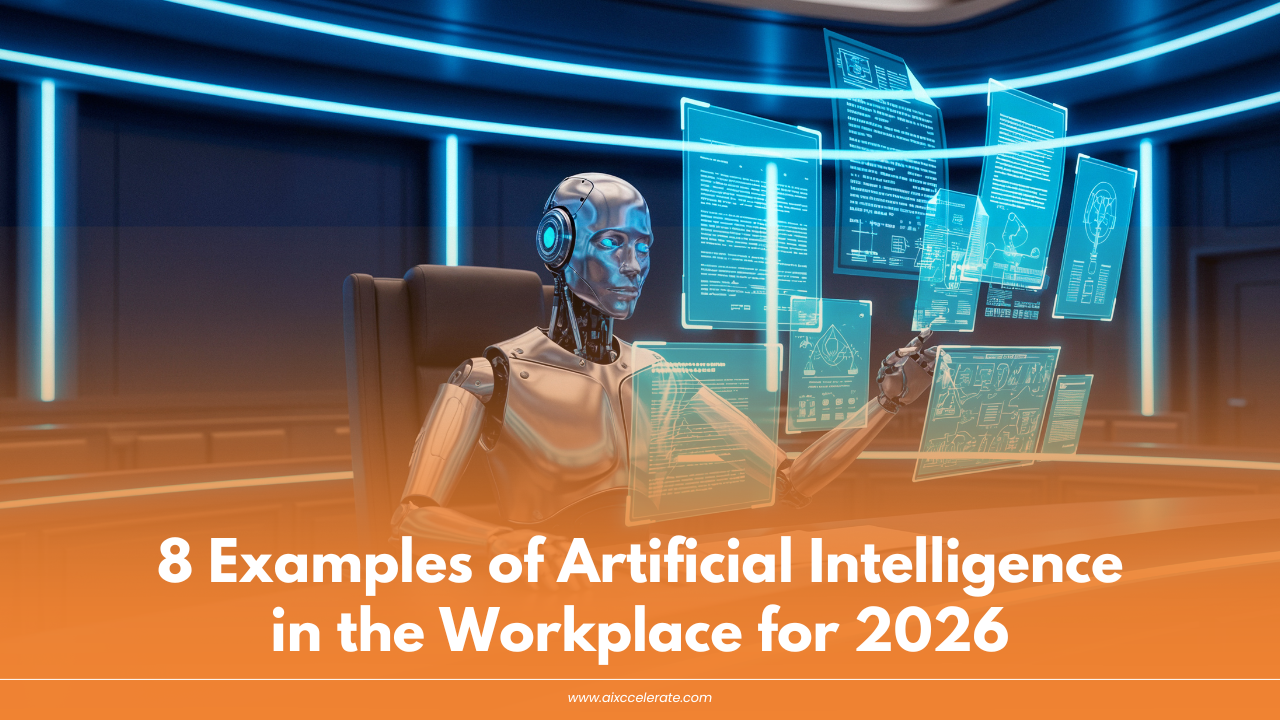
Workplaces are experiencing rapid transformation as artificial intelligence becomes a driving force behind innovation and change. The pace of AI adoption is accelerating, fundamentally reshaping how organizations operate and compete.
Business leaders, managers, and professionals are seeking practical insights to navigate this evolving landscape. Understanding how AI impacts traditional roles and enhances productivity is now essential for success.
This article explores 8 examples of artificial intelligence in the workplace that will define 2026. Discover actionable trends, real-world use cases, and strategies to leverage AI for lasting business advantage.
The Evolving Role of Artificial Intelligence in the Workplace
Artificial intelligence (AI) is rapidly reshaping how organizations operate, and the 8 examples of artificial intelligence in the workplace illustrate just how deeply this transformation reaches. As AI technologies become more accessible, businesses are rethinking old workflows, job roles, and even entire organizational structures.
![[object Object]](https://resources.aixccelerate.com/content/images/2026/03/ctf-1773511896202-k4ynbc95kro.jpg)
Defining AI in the Modern Work Environment
AI in today’s workplace goes far beyond simple automation. It includes technologies like machine learning, natural language processing, robotics, and advanced data analytics. Unlike traditional automation, which relies on fixed rules and repetitive tasks, AI-driven solutions can learn, adapt, and make decisions based on complex data inputs.
Recent advancements in computing power and software have accelerated AI adoption. According to AI Statistics and Usage Data for 2026, over 60% of businesses are expected to use AI in at least one business function by 2026. This surge is not limited to one sector. Industries such as finance, healthcare, manufacturing, and retail are leading the way, each applying the 8 examples of artificial intelligence in the workplace to their unique challenges.
AI is also beginning to reshape organizational structures. Teams are being reorganized to encourage collaboration between human talent and AI systems. Human-AI partnerships are proving essential for driving innovation and maintaining a competitive edge in a rapidly changing marketplace.
Benefits and Challenges of AI Integration
The 8 examples of artificial intelligence in the workplace highlight substantial benefits. Organizations are seeing dramatic boosts in productivity and efficiency as AI handles data-heavy or repetitive tasks. Automated processes are reducing costs, while AI-powered analytics support faster and more informed decision-making.
AI integration also enhances both customer and employee experiences. From smarter chatbots to personalized onboarding, the workplace is becoming more responsive and dynamic. However, these advancements come with challenges. Businesses must invest in workforce reskilling, address ethical questions, and safeguard data privacy.
A comparison of benefits and challenges is outlined below:
Benefits | Challenges |
Increased productivity | Need for reskilling |
Cost savings | Ethical considerations |
Enhanced decision-making | Data privacy concerns |
Better customer experiences | Bias in AI algorithms |
Case studies show that successful AI projects start with a clear strategy. When organizations approach AI thoughtfully, the 8 examples of artificial intelligence in the workplace can deliver measurable ROI. But without careful planning, issues like bias or lack of transparency can undermine trust and effectiveness.
8 Examples of Artificial Intelligence in the Workplace for 2026
Artificial intelligence is rapidly becoming the backbone of modern business operations. As we look toward 2026, the 8 examples of artificial intelligence in the workplace are not just theoretical—they are actively transforming industries and redefining roles.
Below, we explore how these solutions are driving productivity, streamlining workflows, and enabling new possibilities for organizations worldwide.
![[object Object]](https://resources.aixccelerate.com/content/images/2026/03/ctf-1773511897130-sk9eem9ijl.jpg)
1. AI-Powered Customer Service and Virtual Assistants
The first of the 8 examples of artificial intelligence in the workplace is the widespread use of AI-powered customer service and virtual assistants. Companies now deploy chatbots and intelligent helpdesks to provide instant, 24/7 support for customers, handling everything from basic FAQs to complex problem-solving.
Natural language processing enables these bots to understand and resolve intricate queries efficiently. Multilingual capabilities ensure global reach, while integration with CRM systems allows for personalized experiences. For example, retailers and banks have reported a 50% reduction in customer wait times since adopting AI chatbots.
Benefits:
- Cost savings through automation
- Scalability to handle high volumes
- Enhanced customer satisfaction
Challenges:
- Maintaining empathy in interactions
- Managing escalations to human agents
- Ensuring data privacy and security
AI-driven support is a cornerstone among the 8 examples of artificial intelligence in the workplace, setting new standards for service excellence.
2. Intelligent Human Resources and Talent Management
Another standout from the 8 examples of artificial intelligence in the workplace is the transformation of HR. AI-driven applicant tracking systems (ATS) now automate resume screening and candidate shortlisting, dramatically reducing manual workload.
Personalized onboarding and training paths, powered by machine learning, accelerate employee integration. Predictive analytics identify retention risks, while AI tools offer unbiased performance evaluations and promotion recommendations. Enterprises using these systems have seen time-to-hire drop by 40%.
Benefits:
- Increased efficiency in recruitment
- Improved diversity through unbiased screening
- Enhanced talent alignment
Risks:
- Potential for algorithmic bias
- Need for transparency in decision-making
- Data privacy concerns
For a deeper dive, explore how AI for Human Resources is reshaping talent management on a broader scale.
3. Predictive Analytics for Supply Chain and Inventory Optimization
The third of the 8 examples of artificial intelligence in the workplace is predictive analytics for supply chain and inventory management. AI algorithms forecast demand, identify risks, and optimize procurement, leveraging real-time data from IoT devices.
Manufacturers use these solutions to track inventory and automatically manage restocking. AI-powered logistics streamline delivery and reduce excess inventory. Notably, some manufacturers have cut inventory costs by 20% thanks to these advancements.
Benefits:
- Reduced waste through precise forecasting
- Faster delivery times
- Resilience against supply chain disruptions
Challenges:
- Integrating data from multiple sources
- Coordinating with suppliers
- Addressing cybersecurity vulnerabilities
The 8 examples of artificial intelligence in the workplace highlight how predictive analytics is revolutionizing operational efficiency.
4. Advanced Data Analysis and Decision Support Systems
Among the 8 examples of artificial intelligence in the workplace, advanced data analysis and decision support systems stand out for their impact on strategic planning. Machine learning models sift through massive datasets, uncovering actionable insights and trends.
AI-powered dashboards provide real-time business intelligence, while automated reporting tools streamline performance monitoring. For example, financial services now use AI to instantly flag and block fraudulent transactions, protecting both clients and assets.
Benefits:
- Faster, more accurate decisions
- Discovery of hidden patterns
- Enhanced forecasting for long-term growth
Challenges:
- Ensuring data quality and integrity
- Understanding and trusting AI models
- Maintaining necessary human oversight
These capabilities are integral to the 8 examples of artificial intelligence in the workplace, supporting informed, data-driven choices.
5. Personalized Sales and Marketing Automation
Sales and marketing teams are leading adopters in the 8 examples of artificial intelligence in the workplace. AI-driven segmentation and behavioral prediction enable businesses to tailor outreach and content for maximum impact.
Dynamic content generation powers targeted campaigns, while automated lead nurturing and scoring optimize sales pipelines. Retailers leveraging AI personalization have seen conversion rates climb by 30%.
Benefits:
- Higher ROI on marketing spend
- Better customer engagement
- Reduced manual workload
Challenges:
- Navigating data privacy regulations
- Ensuring content accuracy and relevance
- Avoiding over-automation that feels impersonal
For more on this topic, discover practical use cases in AI in Sales and Marketing.
6. AI-Driven Financial Management and Fraud Detection
A vital entry in the 8 examples of artificial intelligence in the workplace is financial management powered by AI. Algorithmic trading platforms analyze markets in real time, while automated tools handle expense tracking and reporting.
Fraud detection systems use anomaly detection to flag suspicious activity within seconds. Banks employing these solutions have reduced fraudulent losses by millions annually.
Benefits:
- Exceptional speed and accuracy
- Lower risk of financial loss
- Streamlined financial operations
Challenges:
- Meeting regulatory compliance standards
- Managing false positives in fraud alerts
- Ensuring transparency in AI decisions
The 8 examples of artificial intelligence in the workplace demonstrate how financial AI tools are reshaping risk management and compliance.
7. Smart Manufacturing: Predictive Maintenance and Quality Control
Within the 8 examples of artificial intelligence in the workplace, smart manufacturing is revolutionizing production. AI sensors monitor equipment health, predicting failures before they occur and scheduling maintenance efficiently.
Computer vision automates quality inspections, identifying defects with greater accuracy than human inspectors. Factories that have implemented predictive maintenance report a 40% reduction in unplanned downtime.
Benefits:
- Lower maintenance costs
- Improved workplace safety
- Consistent product quality
Challenges:
- Integrating AI with legacy equipment
- Managing upfront investment costs
- Training staff for new workflows
Smart manufacturing embodies the innovation found in the 8 examples of artificial intelligence in the workplace.
8. AI in Project Management and Workflow Automation
The final of the 8 examples of artificial intelligence in the workplace is AI-driven project management. These tools assist with task prioritization, resource allocation, and scheduling, providing real-time recommendations for project teams.
Automated risk assessment and forecasting tools help managers anticipate and mitigate issues early. Virtual project assistants facilitate collaboration and keep teams on track. As a result, organizations have improved on-time delivery rates by 25%.
Benefits:
- Streamlined workflows and reduced admin burden
- Data-driven insights for decision-making
- Greater consistency in project outcomes
Challenges:
- Managing user adoption and change
- Maintaining transparency in AI-driven decisions
- Ensuring ongoing training and support
These solutions round out the 8 examples of artificial intelligence in the workplace, showcasing the breadth and depth of AI’s impact.
Key Considerations for Implementing AI in the Workplace
Successfully implementing the 8 examples of artificial intelligence in the workplace requires more than just technology. Organizations must focus on culture, governance, and measurable outcomes to unlock AI's full value. This section explores the foundational considerations every leader should address.
![[object Object]](https://resources.aixccelerate.com/content/images/2026/03/ctf-1773511898257-4a82pd7dwqs.jpg)
Building an AI-Ready Culture
An AI transformation begins with a culture that welcomes change. Leadership must clearly communicate the vision and benefits of integrating the 8 examples of artificial intelligence in the workplace. Transparent messaging reassures staff and sets the tone for collaboration with AI.
Investing in employee training is essential. Upskilling programs help teams adapt to new AI-driven workflows and technologies. Fostering innovation encourages staff to experiment with AI tools and embrace continuous learning.
Addressing concerns about job displacement is critical. Open conversations, fair transition plans, and support for reskilling reduce resistance. According to AI's Impact on 2026 Work Trends, organizations that nurture human-AI collaboration are better positioned for future success.
A culture that values adaptability, learning, and teamwork will maximize the benefits of AI adoption.
Data Governance, Privacy, and Ethics
Robust data governance is the backbone of any AI initiative. When deploying the 8 examples of artificial intelligence in the workplace, businesses must ensure data quality, security, and compliance with regulations such as GDPR and CCPA.
Clear policies around data collection, usage, and storage protect both the organization and its stakeholders. Prioritizing privacy builds trust with employees and customers.
Ethical considerations are equally important. AI algorithms should be regularly audited to identify and mitigate bias. Fairness and transparency in automated decision-making prevent unintended consequences.
Ongoing monitoring of AI systems ensures they remain compliant and effective. Establishing a cross-functional ethics committee can help review sensitive AI projects and address emerging risks.
By prioritizing governance and ethics, organizations lay a strong foundation for sustainable AI integration.
Measuring ROI and Continuous Improvement
To realize value from the 8 examples of artificial intelligence in the workplace, organizations must define clear objectives and key performance indicators (KPIs). Setting measurable goals helps track progress and justify investments.
Performance dashboards and analytics tools enable real-time monitoring of AI outcomes. Teams should regularly review results, gather feedback, and make data-driven adjustments.
Continuous improvement is vital. Iterative updates based on lessons learned foster long-term success. According to AI Workforce Trends for 2026, businesses that embrace ongoing refinement achieve greater ROI and workforce alignment.
Case studies highlight the importance of learning from both successes and failures. A commitment to improvement ensures AI delivers lasting value across all business functions.
The Future of AI in the Workplace: Trends and Predictions for 2026
As organizations look beyond the 8 examples of artificial intelligence in the workplace, the next wave of AI innovation is already on the horizon. The coming years will see workplaces transformed by smarter systems, deeper integration, and closer collaboration between humans and intelligent machines.
![[object Object]](https://resources.aixccelerate.com/content/images/2026/03/ctf-1773511899213-yfw5evciyk.jpg)
Emerging Technologies and Human-AI Collaboration
By 2026, generative AI and autonomous agents will be at the forefront of workplace transformation. These technologies will empower employees to solve complex problems, automate creative tasks, and streamline workflows. Human-AI collaboration will become the norm, with workers using AI as a partner to enhance decision-making and productivity. According to AI Transforming the Workplace by 2026, these advancements will drive new forms of teamwork and innovation, illustrating the ongoing evolution beyond the 8 examples of artificial intelligence in the workplace.
Expansion, Regulation, and Strategic Partnership
AI will expand into new business functions, from legal and compliance to research and development. Organizations will need to adapt to shifting regulations as governments introduce new policies on data privacy, transparency, and algorithmic accountability. As adoption increases, AI will move from being a simple tool to becoming a strategic partner in business operations. This shift will require leaders to rethink traditional roles and structures, ensuring that the 8 examples of artificial intelligence in the workplace remain relevant and effective in a rapidly changing environment.
Preparing for the Future
To stay ahead, businesses must foster a culture that embraces innovation, continuous learning, and adaptability. Upskilling employees, investing in ethical AI practices, and regularly evaluating technology deployments will be critical. By anticipating trends and proactively addressing regulatory and operational challenges, organizations can maximize the value of the 8 examples of artificial intelligence in the workplace and prepare for ongoing transformation. As we’ve explored, artificial intelligence is rapidly transforming every aspect of how we work—from smarter customer service to predictive analytics and seamless workflow automation. If you’re thinking about how these trends could boost your own business’s efficiency and growth, you don’t have to navigate the path alone. At AI Xccelerate, we specialize in building and managing AI agents that deliver real, measurable results across sales, marketing, finance, HR, and more. Ready to see how AI can work for you? Book a meeting with our expert and discover the next steps tailored to your organization.
Frequently Asked Questions
What is 8 Examples of Artificial Intelligence in Workplace?
Artificial intelligence (AI) is rapidly reshaping how organizations operate, and the 8 examples of artificial intelligence in the workplace illustrate just how deeply this transformation reaches. As AI technologies become more accessible, business...
What are the the evolving role of artificial intelligence in the workplace?
Artificial intelligence (AI) is rapidly reshaping how organizations operate, and the 8 examples of artificial intelligence in the workplace illustrate just how deeply this transformation reaches. As AI technologies become more accessible, business...
What are the 8 examples of artificial intelligence in the workplace for 2026?
Artificial intelligence is rapidly becoming the backbone of modern business operations. As we look toward 2026, the 8 examples of artificial intelligence in the workplace are not just theoretical—they are actively transforming industries and redef...
How does key considerations for implementing ai in the workplace work?
Successfully implementing the 8 examples of artificial intelligence in the workplace requires more than just technology. Organizations must focus on culture, governance, and measurable outcomes to unlock AI's full value. This section explores the ...
How does the future of ai in the workplace: trends and predictions for 2026 work?
As organizations look beyond the 8 examples of artificial intelligence in the workplace, the next wave of AI innovation is already on the horizon. The coming years will see workplaces transformed by smarter systems, deeper integration, and closer ...