AI and Finance Guide: Navigating Innovations in 2026
AI is transforming finance in 2026. From strategic planning to cash management, organizations are using agentic AI and generative models to drive efficiency, uncover hidden costs, and empower finance teams to become strategic partners in business growth.
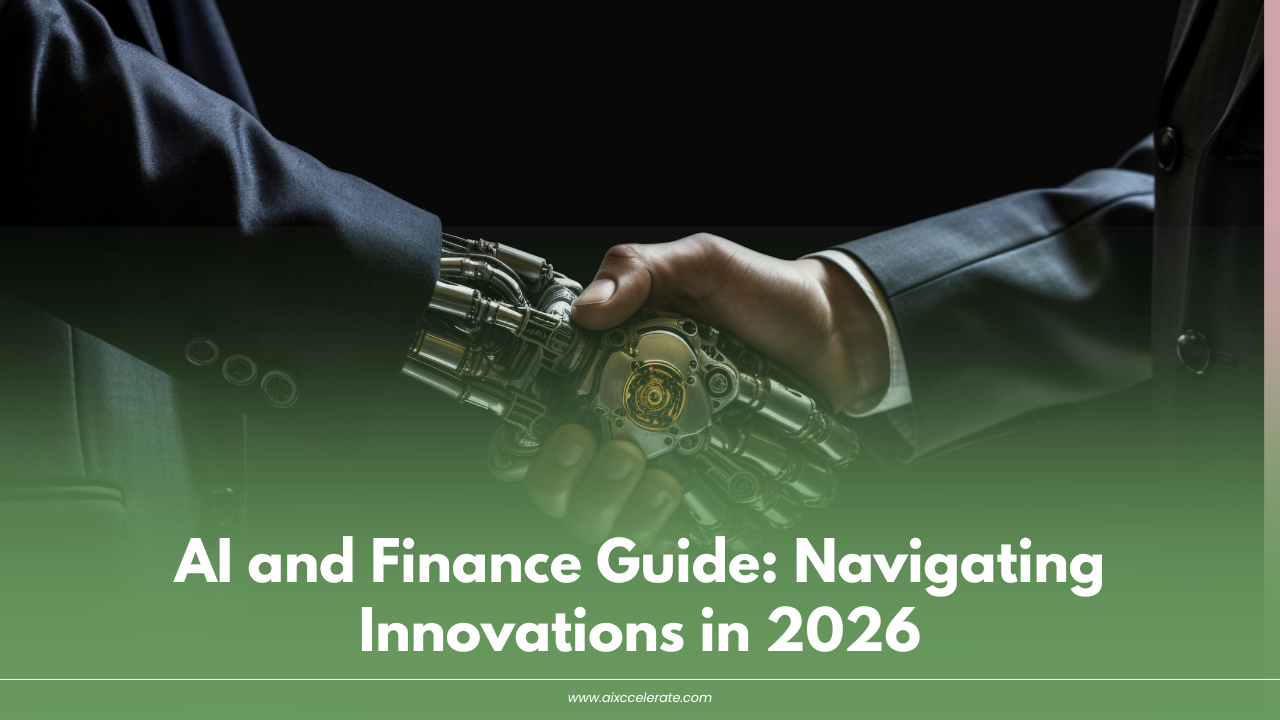
2026 is set to be a pivotal year as ai and finance intersect, creating opportunities that were once unimaginable. Across the globe, financial leaders are witnessing AI move beyond simple automation to drive real business transformation.
This guide unpacks how AI is empowering finance teams to achieve greater efficiency, accuracy, and strategic growth. We’ll explore the evolution of AI in finance, spotlight breakthrough innovations shaping 2026, share real-world case studies, and provide practical steps for successful adoption.
With nearly half of CFOs already leveraging generative AI for multiple use cases, the competitive stakes have never been higher. Use this guide to gain the insights and strategies you need to thrive in the age of AI-driven finance.
The Evolution of AI in Finance: Setting the Stage for 2026
The relationship between ai and finance has undergone a dramatic transformation over the past decade. What started as simple process automation evolved into a sophisticated ecosystem where artificial intelligence is now central to everyday financial operations. In 2026, the pace of change has only accelerated, with organizations reimagining their finance functions for a new era.
![[object Object]](https://resources.aixccelerate.com/content/images/2026/03/ctf-1773511902170-mccejmimi7l.jpg)
A Brief History: From Automation to Agentic AI
The journey of ai and finance began with basic automation. Early tools focused on repetitive tasks such as invoice processing and data entry. Over time, machine learning introduced predictive analytics, allowing teams to forecast trends and identify anomalies with greater speed.
By 2025, generative AI began to reshape the landscape. Large language models started generating financial reports, analyzing market data, and providing recommendations. The next leap came with agentic AI, where autonomous agents now handle complex workflows, from compliance monitoring to scenario planning.
Defining the Technologies: Automation, AI, Generative AI, Agentic AI
To understand the current state of ai and finance, it is helpful to clarify key terms:
Term | Definition |
Automation | Rule-based systems performing repetitive, structured tasks |
AI | Systems that learn from data, identify patterns, and make predictions |
Generative AI | AI that creates new content, such as text, reports, or forecasts |
Agentic AI | Autonomous agents capable of managing end-to-end processes and decisions |
While automation brought efficiency, AI and its newer forms now deliver strategic insights and decision support.
Scaling AI and Finance: From Pilots to Enterprise Transformation
Historically, many organizations limited their ai and finance efforts to isolated pilots. These initiatives often struggled to scale due to data silos, fragmented processes, and unclear value propositions. However, by 2026, the tide is turning. According to recent industry benchmarks, investment in generative AI surged from 25 percent to 65 percent of organizations between 2023 and 2025.
The shift is not just about efficiency. Finance leaders seek more accurate forecasting, proactive risk management, and real-time scenario modeling. As a result, AI is being integrated across entire finance teams, not just select projects.
The 2026 Landscape: New Expectations and Adoption Surge
The rise of agentic AI is a defining feature of ai and finance in 2026. These intelligent agents can independently manage tasks like contract compliance, cash flow optimization, and spend analytics. Expectations are higher than ever: finance professionals are no longer data processors, but strategic partners empowered by AI-driven insights.
Yet, the journey is ongoing. Despite rapid progress, two-thirds of organizations have not fully scaled ai and finance solutions. What is changing in 2026? Greater data standardization, improved integration, and a stronger business case for AI investment. In fact, AI adoption in finance is expected to reach 85 percent by 2026, signaling a new standard for digital transformation across the industry.
As we look ahead, the convergence of technology, talent, and strategy is setting the stage for a future where AI is indispensable to finance leadership and growth.
Breakthrough AI Applications Transforming Finance in 2026
Artificial intelligence is rapidly reshaping the landscape of finance. In 2026, organizations are leveraging ai and finance innovations to unlock new levels of efficiency, accuracy, and insight. The following sections explore how advanced AI tools are transforming key finance functions, providing real-world examples and measurable results.
![[object Object]](https://resources.aixccelerate.com/content/images/2026/03/ctf-1773511903218-11gacc611jq.jpg)
Strategic Planning and Financial Control
In 2026, ai and finance teams are deploying AI-powered decision support tools that deliver predictive analytics, scenario modeling, and real-time reporting. Finance professionals now rely on gen AI assistants to generate customized reports, perform root-cause analyses, and send timely management alerts.
A global consumer goods company implemented these solutions and saw a 30% reduction in time spent on budget variance insights. This freed up finance teams to focus on business partnership and strategic decision-making. AI platforms now seamlessly integrate external, financial, and operational data, providing leaders with deeper insights for resource allocation.
Security and access controls are built into AI-generated financial data, ensuring sensitive information remains protected. The role of finance professionals is evolving, with less time spent on manual data crunching and more on business strategy. For organizations seeking to accelerate their transformation, AI solutions for finance teams offer practical pathways to embed these capabilities into core processes.
As ai and finance continue to converge, companies gain a competitive edge by making faster, more informed decisions while maintaining robust controls.
Cash and Working Capital Management
Agentic AI workflows are redefining how companies manage cash, payables, and receivables. In ai and finance, these autonomous agents handle complex tasks such as invoice-to-contract compliance and procurement automation, reducing manual oversight and errors.
A leading global biotech firm used AI to analyze thousands of vendor contracts and invoices, identifying a 4% contract leakage that was previously undetected. By recovering this lost value, the company improved its margins and optimized working capital. AI tools also monitor early payment discounts, tiered pricing, and rebates in real time, ensuring companies capture every available benefit.
The impact is significant. For organizations with $1 billion in spend, closing leakage gaps can mean up to $40 million in margin improvement. AI-driven cash flow management enhances both accuracy and efficiency, helping finance teams respond quickly to changing business needs.
In 2026, ai and finance teams that harness agentic AI gain a clear advantage in liquidity management and risk reduction.
Cost Optimization and Spend Analytics
Cost optimization is a top priority for finance leaders. AI-driven platforms are now able to analyze granular invoice and purchase order data, enabling precise cost categorization. In ai and finance, large language models and advanced analytics detect anomalies and spending patterns that were previously hidden.
A European financial institution adopted AI-powered spend analytics and uncovered a 10% cost reduction across its multibillion-euro spend. Gen AI classified over 10,000 suppliers, enabling the bank to identify procurement savings and improve supplier diversity. Enhanced visibility into indirect spend and inefficiencies empowers organizations to take targeted action.
Benefit | Impact Example |
Cost Reduction | 10% savings discovered |
Supplier Optimization | 10,000+ suppliers analyzed |
Spend Visibility | Hidden inefficiencies found |
AI-powered recommendations now drive cost control and strategic sourcing decisions. As ai and finance capabilities expand, companies can continuously optimize spend and build more resilient supply chains.
By embracing these breakthrough applications, finance teams are driving measurable value and preparing for a future shaped by data-driven decision-making.
Implementing AI in Finance: Best Practices and Roadmap for 2026
Adopting ai and finance solutions is not just about choosing the right technology. Success depends on a clear roadmap, robust data foundations, empowered teams, and effective partnerships. Let’s break down the essential steps for implementing ai and finance across your organization.
![[object Object]](https://resources.aixccelerate.com/content/images/2026/03/ctf-1773511904147-u72zok0zl9.jpg)
Building a Robust Data and Technology Foundation
A strong data and technology foundation is the bedrock of any successful ai and finance initiative. Begin by assessing your current data landscape. Focus on ensuring data is accurate, connected, and standardized across systems.
Organizations do not need perfect data to start. Leverage existing financial and operational data for immediate ai and finance use cases. Integrate AI tools with core finance platforms to enable seamless information flow and minimize manual data entry.
Security and compliance are non-negotiable. Implement enterprise-grade protections, including data encryption and strict access controls. This safeguards sensitive financial data and builds trust with stakeholders.
Adopt a modular approach. Start with tools and platforms that can scale as your ai and finance needs grow, ensuring your infrastructure is ready for future innovations.
Change Management and Talent Transformation
Driving ai and finance adoption requires more than technology—it demands cultural transformation. Overcoming resistance starts with transparent communication about the benefits and impact of ai and finance on daily work.
Upskilling is vital. Equip finance professionals with new analytical and technical skills. Offer targeted training programs, mentorship, and opportunities to collaborate with AI experts. This builds confidence and prepares teams to work alongside intelligent systems.
Leadership plays a pivotal role. Executives must champion ai and finance initiatives, aligning them with business priorities and value creation goals. Recognize and celebrate early successes to build momentum.
Organizations that invest in talent transformation see greater returns. Finance teams become trusted business partners, using ai and finance tools to deliver faster, more strategic insights.
Phased Approach: From Pilots to Scalable Solutions
Avoid the trap of trying to implement ai and finance solutions everywhere at once. Instead, adopt a phased, domain-by-domain strategy. Start with high-impact use cases—such as spend analytics or cash management—where quick wins are possible.
Develop a clear ai and finance roadmap that ties each pilot to measurable business outcomes. Use results from early projects to refine processes and expand adoption across other finance functions.
Continuously collect feedback from end users. This helps improve AI models and ensures that solutions stay aligned with evolving business needs. Iterative improvement is key to scaling ai and finance successfully.
Monitor progress with dashboards and regular reviews. This transparency keeps teams engaged and focused on delivering value at every stage.
Partnering with AI Solution Providers
Selecting the right ai and finance partners is critical for sustainable success. Evaluate vendors based on their expertise, managed services, and ability to support both SMBs and large enterprises.
Key criteria include:
- Deployment speed and ease of integration with existing systems
- Customization capabilities to fit unique finance workflows
- Transparent performance tracking and clear ROI guarantees
Managed services can bridge talent gaps, providing expert support and ongoing optimization. Look for providers that offer comprehensive change management and training resources.
For practical insights on building effective business AI strategies for 2026, explore Business AI strategies for 2026 for actionable tips and examples.
Strong partnerships ensure your ai and finance initiatives deliver measurable results, accelerate transformation, and keep your organization ahead of the curve.
Overcoming Common Barriers to AI Adoption in Finance
Adopting ai and finance solutions is no longer a futuristic goal but a pressing necessity, especially as global investment in AI is projected to reach $2.5 trillion in 2026 (AI investment projected to reach $2.5 trillion in 2026). Yet, many organizations find themselves stuck at the pilot stage, hindered by a range of barriers that can stall or even derail digital transformation efforts.
![[object Object]](https://resources.aixccelerate.com/content/images/2026/03/ctf-1773511905079-ubg47dnkij.jpg)
Common Barriers Facing AI and Finance Integration
Organizations tackling ai and finance transformation typically encounter several recurring obstacles:
- Data challenges: Finance data often lives in disparate systems, is incomplete, or lacks standardization.
- Legacy processes: Automating outdated or fragmented workflows can introduce more complexity rather than streamline operations.
- Unclear roadmap: Without a strategic vision, isolated AI pilots fail to scale or demonstrate value.
- Change management pitfalls: Underestimating the need for communication and training leads to poor adoption.
- Talent shortages: A lack of technical and analytical finance skills makes AI integration difficult.
- Security and compliance: Navigating evolving regulations adds another layer of risk.
Barriers and Solutions: A Quick Comparison
Barrier | Actionable Solution |
Siloed, unstandardized data | Invest in data integration and ongoing quality checks |
Fragmented legacy workflows | Simplify and modernize processes before automating |
No clear AI roadmap | Develop a phased, business-aligned strategy |
Resistance to change | Prioritize communication and targeted upskilling |
Technical talent gap | Upskill internally and partner with AI experts |
Security and compliance risks | Embed compliance into AI design and monitoring |
Lessons from Successful AI and Finance Leaders
Leading organizations in ai and finance focus on building alignment across teams. They simplify core processes before introducing automation and emphasize robust change management throughout the journey.
Instead of rolling out AI everywhere at once, they transform one domain at a time, using early wins to build momentum and drive cultural buy-in. Continuous data improvement and transparent performance tracking further ensure long-term value.
Moving Forward: Practical Steps for AI and Finance Success
To overcome these barriers, finance leaders should:
- Start with a clear vision and phased AI roadmap.
- Prioritize high-impact, scalable use cases.
- Invest in data foundations, but do not wait for perfection.
- Upskill finance professionals to enhance human-AI collaboration.
- Embed security, compliance, and ethics in every AI initiative.
By following these steps, organizations can unlock the true potential of ai and finance, turning challenges into opportunities for sustained growth and innovation.
Real-World Case Studies: AI in Action Across Finance Functions
The real impact of ai and finance comes alive through real-world applications. Across industries, organizations are leveraging innovative AI tools to solve complex challenges, drive efficiency, and unlock new value. The following case studies highlight how leading companies put ai and finance strategies into action, delivering measurable results and setting new standards for the future.
Case Study 1: AI-Driven Strategic Planning at a Global Consumer Goods Company
A global consumer goods company faced mounting pressure to deliver faster, more accurate financial insights. By deploying generative AI assistants, the finance team automated budget variance analysis and management reporting.
AI-powered tools generated customized reports, performed root-cause analyses, and delivered real-time alerts. This freed up 30 percent of finance professionals’ time, allowing them to focus on strategic business partnership and decision support.
The integration of ai and finance transformed the team’s role from data processing to trusted advisors. As a result, the company improved resource allocation and responded more quickly to market changes.
Case Study 2: Agentic AI for Invoice Compliance at a Biotech Firm
A leading biotech firm implemented agentic AI to monitor compliance between complex vendor contracts and invoices. The AI autonomously compared invoice data against contract terms, identifying discrepancies and potential leakage.
Through this approach, the company discovered 4 percent contract leakage, recovering significant lost value. AI applications enabled real-time tracking of early payment discounts, tiered pricing, and rebates, improving spend management.
This case demonstrates how ai and finance can reduce manual effort, enhance accuracy, and drive margin improvement by closing previously undetected gaps in financial operations.
Case Study 3: Spend Analytics and Cost Optimization in a European Bank
A major European financial institution turned to advanced AI for granular invoice classification and anomaly detection. By leveraging large language models, the AI system analyzed millions of transactions to identify hidden inefficiencies and cost-saving opportunities.
The result was a 10 percent cost reduction across the bank’s multibillion-euro spend. Gen AI helped classify over 10,000 suppliers and provided actionable recommendations for procurement savings. For more insights on similar approaches, explore Cost optimization with AI.
This example showcases the power of ai and finance to uncover value in complex spend data and optimize supplier relationships.
Case Study 4: Supplier Base Optimization in the Packaging Industry
A global packaging company faced challenges managing an extensive supplier base. By deploying gen AI tools, the organization categorized more than 10,000 suppliers, revealing gaps in supplier diversity and new opportunities for strategic sourcing.
AI-driven spend analytics enabled the company to identify procurement savings and enhance cost control. Finance teams gained greater visibility into indirect spend, supporting smarter business decisions.
This case highlights how ai and finance can transform supplier management and drive continuous improvement across procurement functions.
The Future of AI and Finance: Trends and Predictions for 2026 and Beyond
The landscape of ai and finance is poised for dramatic transformation as we move through 2026 and beyond. Finance leaders are witnessing a shift from traditional automation to a world where AI drives real time decisions, strategic foresight, and seamless collaboration across business units.
One of the most significant advancements is the rise of agentic AI. These autonomous agents are now capable of managing end to end finance workflows, from invoice processing to compliance monitoring. For a detailed look at what these agents can do, see the AI agent capabilities overview. Their ability to handle complex tasks frees finance professionals to focus on analysis and business strategy, rather than repetitive operations.
AI is also becoming a true strategic advisor. Sophisticated models support scenario planning, forecasting, and real time risk management, giving finance teams the tools to navigate uncertainty with confidence. Predictive and prescriptive analytics are no longer niche tools—they are becoming standard practice in ai and finance, enabling organizations to anticipate market shifts and respond proactively.
Integration across business functions is another defining trend. AI powered finance solutions are now connecting seamlessly with sales, HR, and operations, creating a unified data environment that enhances decision making across the enterprise. Human AI collaboration is at the core of this evolution, allowing finance professionals to focus on high value tasks such as strategic planning and stakeholder engagement.
The regulatory landscape is evolving in parallel with these advancements. As AI capabilities expand, so do expectations around transparency, compliance, and ethical use. Finance leaders must stay informed about new requirements and ensure their AI systems are both secure and explainable.
Below is a summary table of key trends shaping ai and finance in 2026 and beyond:
Trend | Description |
Agentic AI Expansion | Autonomous agents manage finance workflows |
Strategic AI Advisory | Real time scenario planning and risk modeling |
Cross Function Integration | AI connects finance with sales, HR, and operations |
Human AI Collaboration | Finance teams shift to high value strategic roles |
Regulatory and Ethical Focus | Emphasis on compliance, transparency, ethical AI |
SMB Adoption Increases | AI tools become accessible to smaller organizations |
Predictive & Prescriptive Analytics | Advanced analytics become operational norms |
As accessibility grows, small and medium sized businesses are also embracing ai and finance solutions, leveling the playing field and driving innovation across the sector. The depth and breadth of AI applications are expanding rapidly, as highlighted in resources like the forthcoming Foundations of Artificial Intelligence in Finance: Insights for Practitioners with Applications and Case Studies.
To stay ahead, finance leaders must build agile, AI ready teams that can adapt to continuous change. Investing in upskilling, fostering a culture of innovation, and prioritizing ethical AI practices will be essential. The future of ai and finance is not only about technology—it is about people and how they harness these tools to deliver lasting value. As you explore how AI is reshaping finance in 2026, it’s clear that the right strategy can unlock remarkable efficiency, accuracy, and growth for your business. If you’re ready to move from insights to action and want to see firsthand how seamlessly integrated AI agents can transform your finance operations, I invite you to take the next step. Let’s talk through your unique challenges and goals so you can confidently navigate this new era with measurable results and a guaranteed ROI. Book a meeting with our expert
Frequently Asked Questions
What is AI and Finance Navigating Innovations?
The relationship between ai and finance has undergone a dramatic transformation over the past decade. What started as simple process automation evolved into a sophisticated ecosystem where artificial intelligence is now central to everyday financi...
How does the evolution of ai in finance: setting the stage for 2026 work?
The relationship between ai and finance has undergone a dramatic transformation over the past decade. What started as simple process automation evolved into a sophisticated ecosystem where artificial intelligence is now central to everyday financi...
How does breakthrough ai applications transforming finance in 2026 work?
Artificial intelligence is rapidly reshaping the landscape of finance. In 2026, organizations are leveraging ai and finance innovations to unlock new levels of efficiency, accuracy, and insight. The following sections explore how advanced AI tools...
How does implementing ai in finance: best practices and roadmap for 2026 work?
Adopting ai and finance solutions is not just about choosing the right technology. Success depends on a clear roadmap, robust data foundations, empowered teams, and effective partnerships. Let’s break down the essential steps for implementing ai a...
How does overcoming common barriers to ai adoption in finance work?
Adopting ai and finance solutions is no longer a futuristic goal but a pressing necessity, especially as global investment in AI is projected to reach $2.5 trillion in 2026 ( AI investment projected to reach $2.5 trillion in 2026 ). Yet, many orga...