AI Cost Guide 2026: Unveiling Expenses and Savings
AI costs confuse leaders in 2026. Demystify expenses, uncover hidden costs, and discover savings. Master budgeting from hardware to talent for confident AI investments.
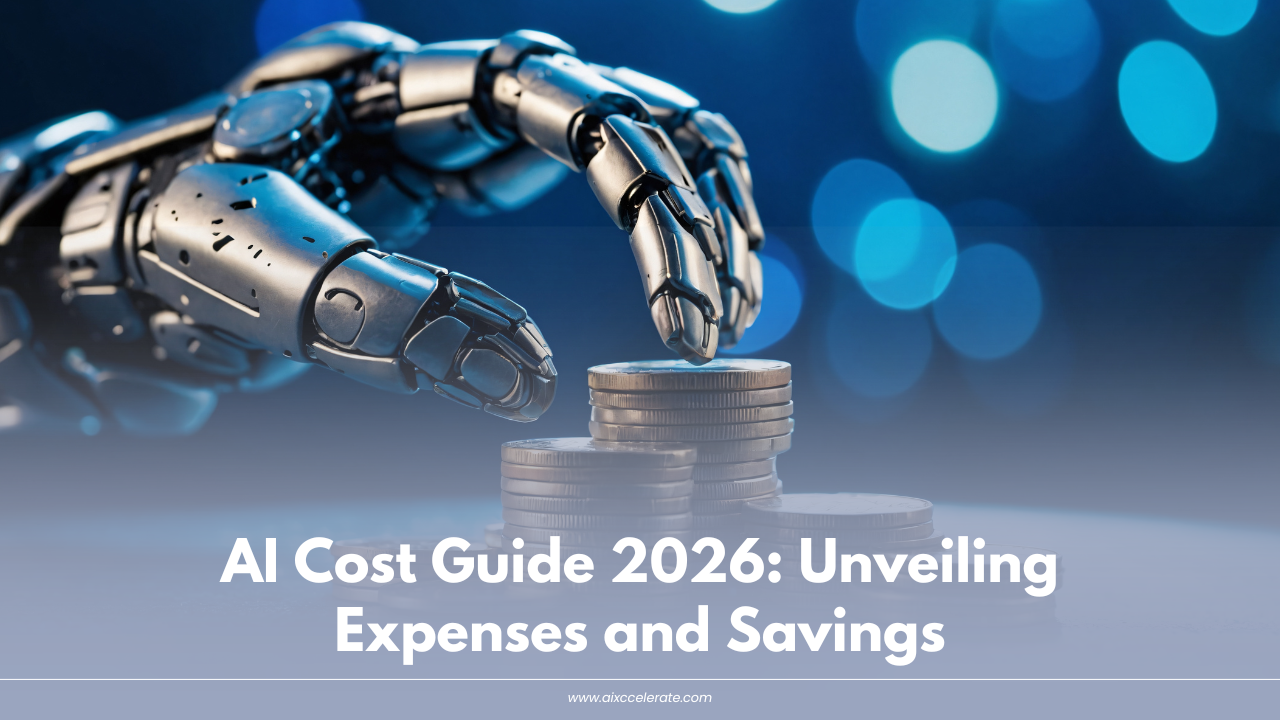
AI is revolutionizing industries at breakneck speed, yet the true ai cost remains a source of confusion for many business leaders planning for 2026. As organizations race to adopt cutting-edge solutions, questions about what drives expenses and where hidden costs lurk are more pressing than ever.
This comprehensive guide is designed to demystify ai cost, offering clarity on both the expenses you can expect and the savings you can unlock. We will break down major cost factors, compare startup and ongoing expenses, evaluate in-house versus outsourced development, and provide actionable strategies to maximize your return on investment.
Whether you're a decision-maker navigating uncertainty or an innovator seeking efficiency, understanding ai cost is crucial to making informed, confident choices. Let this guide empower you to plan your 2026 AI budget with precision and confidence.
Understanding the True Cost Drivers of AI in 2026
The rapid evolution of artificial intelligence means businesses must understand exactly what shapes their ai cost in 2026. Expenses do not just come from buying software or hiring engineers. Instead, they are driven by a complex mix of hardware, data, talent, compliance, and deployment choices. By breaking down these elements, companies can spot hidden pitfalls and find savings opportunities.
![[object Object]](https://resources.aixccelerate.com/content/images/2026/03/ctf-1773511972939-ikl0lg0jgf.jpg)
Key Components of AI Costs
When calculating ai cost, businesses must account for several core elements. Hardware is a major factor, with GPUs and TPUs required for training and inference. Cloud infrastructure pricing fluctuates, and on-premises servers can start at $10,000 or more.
Software licensing, including proprietary AI tools, adds another layer to ai cost. Data collection and preparation are often underestimated, yet high-quality data is vital for effective AI and can consume up to 80% of project time.
Talent is a significant driver as well. AI engineers command salaries between $120,000 and $160,000, with ongoing training needed to keep skills current. Integration with legacy systems and meeting privacy regulations introduce additional expenses. For example, a simple AI model may start at $5,000, while complex enterprise solutions can exceed $500,000.
Industry-Specific Cost Variations
Ai cost fluctuates widely by industry. In healthcare, compliance and security requirements push costs into the $20,000 to $50,000 range just for regulatory alignment. Fintech faces even greater complexity, with ai cost often reaching $150,000 due to strict financial regulations.
Manufacturing, media, and utilities each have unique cost structures. For instance, utilities are investing heavily in smart AI-driven platforms, leading to millions in operational savings despite significant upfront expenses.
Regulatory requirements such as GDPR and HIPAA add to overall ai cost, especially for custom solutions. Off-the-shelf AI may reduce initial spending but can limit flexibility. A notable case is AI-driven insurance claims automation, which slashes administrative overhead while ensuring compliance.
The Impact of AI Model Choice and Scale
Selecting the right AI model has a direct impact on ai cost. Generative AI, such as large language models (LLMs), demands higher compute power and storage, raising both initial and ongoing expenses. In contrast, smaller models may offer cost efficiency for targeted tasks.
As projects scale from pilot to production, ai cost rises due to increased compute, storage, and data needs. Multimodal and multi-model approaches can enhance efficiency but may complicate budgeting. According to an IBM report, compute costs are expected to rise by 89 percent by 2025, making scalability planning essential.
Environmental and energy costs are also growing concerns. Organizations must factor in sustainability practices, as energy use for large models can be significant.
Data: The Double-Edged Sword
Data is both an asset and a challenge in ai cost management. Gathering, cleaning, and labeling large datasets requires substantial investment. Many companies outsource data labeling to control costs, but data quality remains a critical factor.
Poor data can increase ai cost by causing project delays and reducing AI performance. Security and privacy investments are non-negotiable, especially in regulated industries. Businesses must also decide between cloud and on-premises data management, each with its own cost structure.
Industry statistics reveal that up to 80 percent of AI project time is spent on data preparation. Investing here can pay off by reducing long-term expenses and boosting model accuracy.
Cloud, Hybrid, and On-Premises Infrastructure Costs
Infrastructure choice significantly shapes ai cost. Cloud services like AWS, Azure, and Google Cloud offer flexible pricing models, but costs can quickly add up with large-scale AI workloads. On-premises solutions require high upfront investments but may lower ongoing variable costs.
Hybrid cloud strategies are gaining traction, letting businesses balance flexibility and control. For example, using spot instances or serverless architectures can help reduce spend. Financial operations (FinOps) tools are essential for monitoring and optimizing ai cost across environments.
Sustainability is another key factor. Energy-efficient practices not only reduce environmental impact but can also contribute to lower operational costs. For more detailed guidance, explore these AI resources for business costs.
Startup and Ongoing AI Expenses: What to Expect
Navigating the landscape of ai cost in 2026 requires clarity on both startup and ongoing expenses. Many organizations underestimate the true investment required, leading to budget overruns or stalled projects. Let us break down the financial journey, from initial pilots to scaling, and highlight where hidden costs often arise.
![[object Object]](https://resources.aixccelerate.com/content/images/2026/03/ctf-1773511973972-z1t1mi07f78.jpg)
Upfront Costs: From Pilot to Production
The initial ai cost for businesses starts with hardware, software licenses, and acquiring quality data. Setting up servers alone can exceed $10,000, while proof of concept (PoC) and minimum viable product (MVP) stages usually demand additional investments. Vendor selection significantly shapes both hourly rates and total expenditure, especially if customization or integration with existing workflows is required.
Before full deployment, an AI readiness assessment helps identify gaps and avoid costly surprises. For instance, industry-specific pilots in healthcare or finance often range from $20,000 to $150,000 depending on compliance and complexity. Being thorough at this stage ensures a smoother transition to production.
Ongoing Maintenance and Support
Once AI systems are live, ongoing ai cost considerations become central to budgeting. Regular software and hardware updates, patch management, and retraining of models to maintain accuracy are necessary. Compliance updates, especially for sectors like healthcare, add to maintenance frequency and cost.
Cloud compute usage and storage fees can fluctuate, making close monitoring essential. Downtime, troubleshooting, and scaling up—whether adding new users, features, or expanding data sources—further contribute to ongoing expenses. Proactive budgeting for these elements protects against unexpected financial strain.
Hidden and Emerging Costs in 2026
Many organizations overlook hidden ai cost factors that can derail even well-planned projects. Compute cost inflation is a major concern, with reports forecasting an 89 percent increase between 2023 and 2025. Energy usage and sustainability, or "green ops," are also rising priorities, as are investments in cybersecurity to safeguard AI assets.
Shifting regulatory requirements may introduce new compliance overhead. Opportunity costs arise when projects are postponed or canceled, which is not uncommon—70 percent of executives have delayed at least one AI initiative due to unforeseen expenses. Vendor lock-in and switching costs can further complicate long-term budgeting.
Cost-Effective Testing and Scaling Strategies
To control ai cost, organizations should embrace lean, incremental adoption through agile methodologies. Using modular and reusable components streamlines development, while open-source or community-supported frameworks reduce licensing fees. Outsourcing non-core tasks, such as data labeling, can also lower expenses.
Proof of concept (PoC) projects validate value before full-scale investment. Leveraging third-party AI software accelerates deployment and minimizes risk. For actionable guidance, consider exploring AI implementation playbooks to optimize testing and scaling strategies and ensure cost efficiency.
Strategies for Predictable and Transparent Budgeting
Predictability in ai cost management is achievable through fixed monthly subscription models for AI services and robust ROI dashboards. Cloud cost management tools (FinOps) provide visibility, while clear vendor SLAs and cost guarantees help avoid surprises. Comparing predictable pricing models to pay-as-you-go options clarifies the best fit for your needs.
Budgeting should always include maintenance and scaling considerations. Engaging AI consultants early supports accurate cost planning and smooth scaling. Transparent processes and regular performance reviews keep financial goals aligned with business objectives.
In-House vs. Outsourced AI Development: Cost, Value, and Risk
Choosing between in-house and outsourced AI development is a pivotal decision that shapes your total ai cost, project flexibility, and long-term value. Each approach brings distinct advantages and challenges, making it essential to align your strategy with your organization’s goals, budget, and talent resources.
![[object Object]](https://resources.aixccelerate.com/content/images/2026/03/ctf-1773511975010-gn2o3c3733a.jpg)
In-House AI Development: Pros, Cons, and Costs
Building AI capabilities in-house offers maximum control, customization, and intellectual property ownership. However, the ai cost is often substantial due to recruiting, onboarding, and retaining top talent. AI engineers in the US command salaries from $120k to $160k or more, with additional expenses for ongoing training and professional development.
Hidden costs can accumulate from team expansion, technology upgrades, and the risk of project delays caused by skill gaps. In-house teams may struggle to keep pace with evolving AI tools or regulatory requirements, leading to further increases in ai cost. For example, some companies experience deployment slowdowns when unable to fill critical AI roles, impacting timelines and ROI projections.
- Advantages: Full control, tailored solutions, IP retention.
- Drawbacks: High ai cost, talent shortages, slower ramp-up.
- Risks: Burnout, retention issues, unforeseen integration challenges.
Outsourcing and Managed AI Solutions
Outsourcing AI development offers access to specialized expertise, scalability, and reduced upfront ai cost. Partnering with external vendors allows businesses to leverage global talent pools, often at lower rates, and to deploy projects more quickly. Managed solutions can provide predictable pricing models, helping organizations manage budgets and timelines effectively.
However, outsourcing introduces potential risks, such as vendor lock-in, data security concerns, and integration hurdles with existing systems. Clear communication and robust service-level agreements are crucial to mitigate these challenges. Many organizations report success by hiring remote developers in emerging markets, achieving substantial ai cost savings while accelerating project delivery.
- Strengths: Specialized skills, faster go-to-market, scalability.
- Risks: Vendor dependency, potential security gaps, integration complexity.
- Best practices: Due diligence on vendors, strong contracts, ongoing oversight.
Hybrid Approaches and Collaboration Models
A hybrid model combines in-house oversight with external expertise, offering a balanced approach to ai cost, speed, and control. Co-development and knowledge transfer strategies allow organizations to maintain strategic direction while accessing specialized skills when necessary.
For instance, hybrid teams can quickly prototype and scale AI initiatives, leveraging managed services for maintenance and optimization. This approach aligns AI projects with business goals and culture while minimizing risk. By blending internal and external resources, companies optimize ai cost and maximize long-term value.
- Benefits: Flexibility, faster innovation, controlled ai cost.
- Implementation: Shared project management, blended teams, clear communication.
- Success factors: Alignment with business strategy, ongoing learning, robust integration.
Cost Comparison and Decision Framework
Evaluating the right development model starts with a Total Cost of Ownership (TCO) analysis, factoring in ai cost across talent, infrastructure, and ongoing support. ROI timelines differ for each approach, with in-house projects requiring higher initial investment but potentially yielding greater customization.
The table below summarizes key considerations:
Criteria | In-House | Outsourced | Hybrid |
Upfront ai cost | High | Low-to-moderate | Moderate |
Control | Full | Limited | Shared |
Speed | Slower | Faster | Fastest |
Flexibility | High | Vendor-dependent | High |
Risk | Talent, delays | Vendor, integration | Balanced |
When making a decision, consider these steps:
- Assess project scope, timeline, and ai cost constraints.
- Model TCO and ROI for each option.
- Prioritize flexibility, scalability, and your strategic priorities.
- Avoid common pitfalls such as underestimating integration or training costs.
For more practical guidance, explore AI cost optimization strategies to streamline your decision process and control expenses.
Maximizing ROI and Achieving Sustainable Savings with AI
Maximizing ROI from AI investments requires a clear strategy and a deep understanding of both expenses and value creation. As organizations assess ai cost, they must consider not just direct spending but also how AI drives long-term performance and competitive advantage.
![[object Object]](https://resources.aixccelerate.com/content/images/2026/03/ctf-1773511975933-vsduny2wdye.jpg)
Measuring AI ROI: Tangible and Intangible Benefits
Understanding how to measure AI ROI is essential for justifying investments and guiding future decisions. The basic formula is straightforward: ROI = (Benefits – ai cost) / ai cost.
Tangible benefits include:
- Productivity gains and cost reductions
- Revenue growth from new or improved products
- Shorter processing times (e.g., 66% reduction via automation)
Intangible benefits are equally important:
- Gaining a competitive edge in your market
- Boosting innovation and brand value
- Improving decision-making agility
For example, financial firms leveraging AI for claims processing have cut administrative time dramatically, resulting in measurable savings. Tracking both short and long-term returns ensures organizations make informed decisions about ai cost and value.
Cost Optimization Strategies for 2026
Controlling ai cost in 2026 means adopting the right mix of technology and best practices. Start by selecting models tailored to your use case—sometimes smaller, more efficient models outperform larger ones in cost-effectiveness.
Key strategies include:
- Streamlining code and workflows to minimize compute expenses
- Using quantization and pruning to reduce hardware needs
- Leveraging hybrid and multimodal AI for flexibility
- Utilizing cloud resource optimization tools and spot instances
- Consolidating platforms to avoid duplication
For more specific guidance on streamlining operational expenses, see Cost-effective AI in operations. By focusing on these tactics, organizations can make ai cost more predictable while maximizing performance.
AI as a Driver of Efficiency and Innovation
AI is not just a cost center—it is a catalyst for efficiency and new value creation. Automation of repetitive tasks allows teams to focus on higher-level work, directly impacting both productivity and ai cost savings.
Consider these impacts:
- Enhanced productivity in finance, HR, sales, and operations
- New business models and revenue streams enabled by AI insights
- Reduced time to market for products and services
In the utilities sector, for example, AI-driven platforms have saved over 20 million m³ of water, demonstrating both environmental and financial returns. Smart ai cost management supports innovation and sustainability across industries.
Overcoming Barriers to AI Savings
Despite the promise of AI, several barriers can limit savings and ROI. Skills shortages and cultural resistance often slow adoption, while data privacy and compliance add complexity to ai cost calculations.
To overcome these hurdles:
- Invest in upskilling and fostering a data-driven culture
- Prioritize regulatory compliance from the start
- Manage stakeholder expectations with transparent communication
- Use feedback loops and agile methods for continuous improvement
Many companies have postponed projects due to unclear cost-benefit analysis. Building AI literacy and strong change management practices ensures that ai cost is controlled and savings are realized.
Actionable Steps for Businesses Planning AI Investments in 2026
Taking a structured approach to planning your AI investments can reduce uncertainty and help you optimize your AI cost in 2026. By following a step-by-step framework, organizations can align technology with business value and ensure sustainable results.
Step 1: Assess Organizational AI Readiness
Begin by evaluating your current data infrastructure and the quality of available data. Robust data pipelines are essential to manage AI cost effectively. Identify which business functions could benefit most from AI and conduct a formal AI readiness assessment.
- Map out data sources and integration points.
- Involve cross-functional teams and stakeholders.
- Address any cultural or skill-related barriers early.
Setting clear objectives and success metrics at this stage ensures your AI initiatives are focused and measurable. Referencing current AI adoption statistics 2026 can help benchmark your organization's preparedness.
Step 2: Define Scope, Budget, and Success Metrics
Prioritize use cases based on ROI potential and set realistic budgets for both pilot and full-scale phases. Understanding global investment trends, such as those detailed in Global AI investment projections, can inform your budgeting process and prevent unexpected ai cost overruns.
- Define KPIs for productivity, cost per transaction, and error reduction.
- Plan for compliance and security from the outset.
- Ensure AI strategy aligns with overall business objectives.
Flexibility is key. Build room for future scaling as success metrics are met and new opportunities arise.
Step 3: Choose the Right Development and Deployment Model
Evaluate whether in-house, outsourced, or hybrid models best suit your needs. Each approach impacts your ai cost differently. Consider the technology stack, such as cloud, on-premises, or hybrid infrastructure, and weigh the benefits of managed AI solutions for rapid deployment.
- Negotiate transparent pricing and SLAs with vendors.
- Plan for ongoing training and support.
- Ensure seamless integration with existing workflows.
Modular, reusable AI components can help reduce both initial and long-term expenditures, keeping your ai cost under control as you scale.
Step 4: Implement, Monitor, and Optimize
Start with a proof of concept or minimum viable product to validate your approach before full investment. Use dashboards to monitor both costs and performance, ensuring your ai cost remains predictable.
- Conduct monthly performance reviews and ROI tracking.
- Continuously update models and processes for efficiency.
- Encourage a culture of experimentation and feedback.
Scaling successful pilots across your organization requires ongoing optimization. Regularly reviewing and refining your AI investments will maximize both value and savings.
Frequently Asked Questions: AI Costs and Savings in 2026
Curious about the real-world impact of AI cost in 2026? Here are the most common questions businesses ask about expenses, savings, and planning:
- What are the main factors that influence AI cost in 2026? Core drivers include hardware, software, data quality, talent, integration, and compliance.
- How do generative AI models affect budgets? Generative models require more compute and storage, often increasing overall AI cost.
- What are typical cost ranges for different industries? Expenses vary: finance, for example, faces unique challenges. Learn more about AI solutions for finance departments to see specific industry breakdowns.
- How can businesses reduce ongoing expenses? By optimizing data workflows, leveraging cloud solutions, and adopting modular AI components.
- What hidden costs should companies watch for? Data preparation, regulatory compliance, and retraining can significantly increase the total AI cost.
- How do cloud and hybrid infrastructures help manage costs? They offer flexibility, scalability, and potential savings through pay-as-you-go or hybrid models.
- What are best practices for maximizing ROI? Start small, monitor performance, optimize models, and align AI initiatives with business goals.
- Where can I find more resources for AI budgeting and planning? Industry reports, technology partners, and specialized consultants can provide valuable guidance.
Now that you have a clear picture of where AI expenses come from, what drives them up or down, and practical steps to maximize your ROI, the next move is making these insights work for your business. If you’re ready to turn uncertainty into a concrete AI strategy—whether you’re budgeting, planning, or looking to streamline operations—let’s have a conversation about your unique needs and goals. You don’t have to navigate the complex world of AI costs alone. Book a meeting with our expert and let’s explore how you can achieve measurable savings and sustainable growth with confidence.
Frequently Asked Questions
What is AI Cost 2026 Unveiling Expenses and Savings?
The rapid evolution of artificial intelligence means businesses must understand exactly what shapes their ai cost in 2026. Expenses do not just come from buying software or hiring engineers. Instead, they are driven by a complex mix of hardware, d...
How does understanding the true cost drivers of ai in 2026 work?
The rapid evolution of artificial intelligence means businesses must understand exactly what shapes their ai cost in 2026. Expenses do not just come from buying software or hiring engineers. Instead, they are driven by a complex mix of hardware, d...
How does startup and ongoing ai expenses: what to expect work?
Navigating the landscape of ai cost in 2026 requires clarity on both startup and ongoing expenses. Many organizations underestimate the true investment required, leading to budget overruns or stalled projects. Let us break down the financial journ...
What are the in-house vs. outsourced ai development: cost, value, and risk?
Choosing between in-house and outsourced AI development is a pivotal decision that shapes your total ai cost, project flexibility, and long-term value. Each approach brings distinct advantages and challenges, making it essential to align your stra...
How does maximizing roi and achieving sustainable savings with ai work?
Maximizing ROI from AI investments requires a clear strategy and a deep understanding of both expenses and value creation. As organizations assess ai cost, they must consider not just direct spending but also how AI drives long-term performance an...