Human AI Collaboration Guide: Unlocking Synergy in 2026
Unlock the future of human AI collaboration with a 2026-ready guide. Discover proven strategies, real examples, and best practices to maximize business synergy.
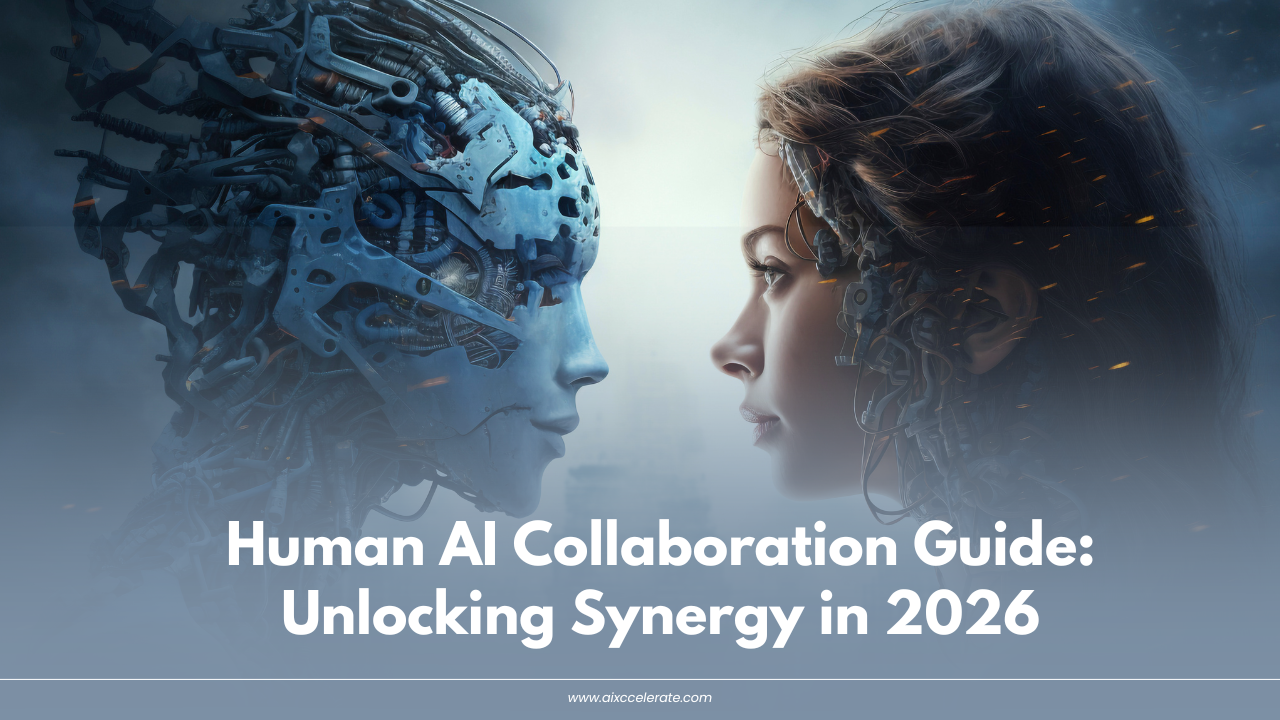
Imagine a workplace in 2026 where professionals and intelligent AI agents work side by side, unlocking new heights of productivity and creativity. This is the promise of human ai collaboration, which is rapidly reshaping how organizations operate and compete.
This guide provides a clear, actionable roadmap for leveraging human ai collaboration to drive business success in an ever-evolving digital landscape. Discover how the shift from automation to true partnership creates synergy, empowers teams, and sets the stage for innovation.
Are you ready to harness the urgency, potential, and tangible benefits of this transformation? Follow this guide to unlock synergy in your business today.
The Evolution of Human-AI Collaboration
The journey from simple automation to true partnership between humans and AI has transformed the modern workplace. Over the past decade, organizations have moved beyond using AI only for repetitive tasks and now embrace a new era of synergy. This shift is redefining productivity, decision-making, and innovation.
![[object Object]](https://resources.aixccelerate.com/content/images/2026/03/ctf-1773511837381-q4ac60xyqhq.jpg)
Shifting from Automation to Synergy
Traditional automation relied on rule-based systems to handle repetitive, structured tasks. These tools were efficient but limited, often requiring manual intervention for anything outside pre-set rules. In contrast, the latest phase of human ai collaboration features adaptive, context-aware AI that works alongside people, not just for them.
A key driver in this evolution is Agentic AI. These systems offer proactive, context-driven support, anticipating needs and assisting humans in real time. Agentic AI can manage dynamic workflows, such as IT ticketing or customer support, adjusting to changing priorities and escalating complex cases to human experts.
Collaborative intelligence is central to this progress. By combining human creativity and judgement with AI's speed and analytical power, organizations achieve superior results. Competitors like Aisera report that Agentic AI boosts workplace efficiency and decision quality, highlighting the measurable impact of this approach.
Modern AI agents now learn and adapt, acting as teammates rather than just tools. They offer flexibility and scalability, allowing businesses to grow without adding headcount. However, human oversight and creativity remain crucial, ensuring that AI delivers value while upholding ethics and quality.
Key Milestones in Human-AI Teaming
The timeline of human ai collaboration reveals a steady progression:
Year | Milestone |
|---|---|
2010-2015 | Rule-based automation in back-office tasks |
2016-2020 | Workflow automation, limited machine learning |
2021-2023 | AI-powered analytics, conversational agents |
2024-2026 | Collaborative platforms, Agentic AI |
Industry use cases illustrate this evolution. Salesforce and Aisera have led the way in integrating AI into sales, service, HR, finance, and operations. As a result, workplace acceptance of AI teammates has grown rapidly. In 2025, 71% of businesses increased AI investment, reflecting rising trust in human ai collaboration.
A real-world example is customer support teams leveraging AI agents to resolve queries faster and improve satisfaction. These teams blend AI-driven efficiency with human empathy, proving that synergy delivers both speed and quality. As organizations continue to adopt collaborative models, structured scenarios—such as those outlined by Gartner's four scenarios for human-AI collaboration—will guide future strategies.
The ongoing evolution highlights the importance of flexible, scalable systems that empower both humans and AI to excel together.
Core Models and Frameworks for Human-AI Collaboration
Understanding the core models and frameworks behind human ai collaboration is essential for organizations aiming to create synergy between people and intelligent systems. As AI matures, businesses must navigate not only technical capabilities but also the human dimensions of trust, ethics, and teamwork.
![[object Object]](https://resources.aixccelerate.com/content/images/2026/03/ctf-1773511838435-ecuzgq8vfdw.jpg)
Types and Roles of AI in Collaboration
Human ai collaboration relies on understanding different AI categories and their practical roles. The main types include Reactive Machines, Limited Memory AI, Theory of Mind AI, and Self-Aware AI. Each type brings unique capabilities to business environments.
AI Type | Key Feature | Example Role in Collaboration |
|---|---|---|
Reactive Machines | Responds to current input | Basic automation, rule-based tasks |
Limited Memory AI | Learns from past data | Workflow automation, analytics |
Theory of Mind AI | Understands emotions/intent | Empathetic chatbots, adaptive support |
Self-Aware AI | Self-reflection, autonomy | Emerging, future applications |
Limited Memory AI is the most widely used for automating workflows and providing real-time analytics. In customer service, Theory of Mind AI powers chatbots that adapt to emotional cues, enhancing the quality of human ai collaboration.
Transparency is a critical factor. Organizations must decide between transparent AI systems, which offer clear logic and explanations, and opaque (black-box) systems, which can be harder to audit. Responsible AI frameworks often use post hoc explanations or built-in interpretability to foster accountability.
For a deeper dive into the different AI agent types and their business roles, visit AI Agents for Core Business Functions.
Human-Centric AI Design Principles
A successful human ai collaboration strategy prioritizes people, ethics, and organizational values. Human-centric AI development focuses on well-being, trust, and aligning intelligent systems with user needs.
Key design principles include:
- Emphasizing emotional intelligence and empathy in AI interactions
- Ensuring contextual understanding for nuanced decision-making
- Building transparency and explainability into every system
These principles are especially vital in sensitive sectors like healthcare, education, and customer service, where trust and ethical alignment are non-negotiable.
According to recent industry insights, 62% of organizations now cite ethical AI as a top priority for 2026. This shift reflects the growing importance of balancing AI speed and accuracy with human oversight and judgment.
For example, AI agents in healthcare can provide personalized treatment recommendations, but human professionals remain responsible for oversight and final decisions. This approach ensures that human ai collaboration enhances outcomes without compromising patient safety or ethical standards.
Step-by-Step Guide to Implementing Human-AI Collaboration in 2026
Adopting human ai collaboration requires a structured, methodical approach. Begin with clear objectives and a readiness assessment to pave the way for successful integration.
![[object Object]](https://resources.aixccelerate.com/content/images/2026/03/ctf-1773511839468-j5swz1tcr4n.jpg)
1. Assess Organizational Readiness
Start by evaluating your current workflows and digital maturity. Is your team open to change? Identify departments where human ai collaboration could deliver the most value, such as sales, HR, or operations.
Gather employee feedback using surveys or interviews. Address concerns about job roles or AI’s impact on work culture. A readiness checklist may include:
- Digital infrastructure assessment
- Leadership support
- Change management capabilities
By preparing your organization, you lay the foundation for effective collaboration between humans and AI agents.
2. Define Collaboration Goals and Metrics
Set clear objectives for human ai collaboration. Are you aiming for higher productivity, faster response times, or better customer experiences?
Establish key performance indicators (KPIs) such as:
- Task completion speed
- Error reduction rates
- Customer satisfaction (NPS)
- Return on investment (ROI)
Benchmark against industry leaders to set realistic targets. For example, some companies have achieved 30 percent faster ticket resolution with AI agents. Defining these metrics upfront ensures you can measure progress and demonstrate value.
3. Select the Right AI Collaboration Models and Tools
Choose collaboration models suited to your needs: agentic AI for dynamic workflows, conversational AI for customer support, or workflow-based AI for automation.
Prioritize platforms offering transparency, security, and integration with existing systems. Consider solutions that provide explainability to foster trust.
To streamline your process, consult AI Collaboration Playbooks for practical guides and best practices tailored to various business functions. This step ensures your human ai collaboration strategy is both robust and adaptable.
4. Integrate AI Agents with Human Teams
Map out how humans and AI agents will work together. Define roles and responsibilities clearly. Use flowcharts or diagrams to visualize collaboration points.
Provide targeted training so employees understand AI capabilities and limitations. Encourage a culture of experimentation, where teams can give feedback and suggest improvements.
Human ai collaboration thrives when communication is open and teams feel empowered to leverage AI as a reliable teammate.
5. Monitor, Optimize, and Scale
Consistently track performance through dashboards and analytics. Gather feedback from users and stakeholders to spot areas for improvement.
Iterate on your approach, making adjustments based on real-world outcomes. Once initial pilots succeed, expand human ai collaboration to new departments or processes.
Regular reviews and optimization will help your organization scale AI integration, maximizing long-term synergy and business impact.
Real-World Examples and Use Cases of Human-AI Synergy
Across industries, human ai collaboration is transforming how organizations operate, solve challenges, and deliver value. By integrating AI agents as teammates, businesses are redefining workflows and achieving results that neither humans nor AI could reach alone.
![[object Object]](https://resources.aixccelerate.com/content/images/2026/03/ctf-1773511840596-maa0eeqi6c.jpg)
Industry-Specific Applications
In IT and service desks, human ai collaboration enables AI agents to triage incoming tickets, resolve routine requests, and escalate complex issues to human experts. This blend of automation and human judgment accelerates response times and enhances service quality.
- Sales and Marketing: AI-driven lead scoring and personalized outreach empower sales teams to focus on high-value prospects, while humans oversee strategy and relationship building.
- HR and Talent Management: AI screens candidate resumes, automates onboarding, and analyzes employee engagement, freeing HR professionals to focus on culture and development.
- Finance: Automated expense processing, real-time analytics, and fraud detection tools support financial teams, with humans making strategic decisions.
- Customer Success: AI chatbots handle common queries so customer success teams can address escalations and nurture client relationships. For more detailed examples, see Customer Success with AI Agents.
By applying human ai collaboration in these areas, organizations gain agility, improve outcomes, and deliver better experiences for employees and customers alike.
Measurable Impact and Outcomes
The impact of human ai collaboration is evident in quantifiable results across sectors. For instance, Aisera’s OneTouch Assistant reduced support costs and elevated customer satisfaction by streamlining support workflows. In sales, Salesforce reported a 25 percent increase in pipeline efficiency when AI agents worked alongside human teams.
Healthcare, education, manufacturing, and logistics are adopting similar models, with 82 percent of business leaders believing that AI-human teams outperform either alone. These outcomes highlight how continuous learning, adaptation, and feedback loops are essential for maximizing synergy.
As organizations refine their approaches, human ai collaboration continues to drive innovation, measurable gains, and sustainable competitive advantage.
Overcoming Challenges and Maximizing Synergy in Human-AI Collaboration
Navigating the road to effective human ai collaboration is not without obstacles. Organizations must address both technical and cultural challenges to unlock true synergy.
Addressing Barriers to Adoption
Implementing human ai collaboration presents several hurdles that organizations must overcome. Data privacy and security are top concerns, as AI systems handle sensitive information. Employee resistance can arise from fears about job displacement or lack of understanding. Integration challenges, such as legacy systems and inconsistent data, may also slow progress.
A recent Gallup survey on AI adoption found that a growing number of workers are interacting with AI in their daily roles, yet many remain cautious. To address these issues, organizations should:
- Communicate transparently about the goals and impact of human ai collaboration.
- Invest in ongoing training to build AI literacy and confidence.
- Engage stakeholders early for buy-in and feedback.
- Prioritize explainable and ethical AI to foster trust.
A phased approach, including pilot programs and feedback loops, helps teams adapt gradually. The table below summarizes key challenges and solutions:
Challenge | Solution |
|---|---|
Data privacy | Robust security protocols |
Employee resistance | Transparent communication |
Integration issues | Incremental, modular rollouts |
AI literacy gaps | Targeted training programs |
By proactively addressing these barriers, organizations lay the groundwork for successful human ai collaboration.
Future-Proofing Your Collaboration Strategy
Sustaining synergy in human ai collaboration requires more than just initial adoption. Rapid advances in AI—such as agentic AI and conversational platforms—demand continuous adaptation. Organizations must foster a culture of innovation, where teams are encouraged to experiment and learn from new tools.
Investing in upskilling is essential. The McKinsey report on AI and workforce skills highlights the need for new skill partnerships, emphasizing that employees who adapt alongside AI will thrive. Best practices for future-proofing include:
- Regularly updating collaboration workflows to align with evolving business needs.
- Monitoring industry trends and benchmarking against competitors.
- Encouraging cross-functional collaboration between IT, AI, and business units.
- Scaling successful pilots to other departments.
Looking ahead, projections suggest that by 2026, over 60 percent of businesses will operate with integrated human ai collaboration teams. Preparing for trends like empathetic agents and cross-functional platforms will ensure organizations remain ahead of the curve. Continuous learning and adaptation are the keys to maximizing synergy in this new era.
Best Practices and Recommendations for Unlocking Human-AI Synergy
Embracing best practices is essential for organizations aiming to maximize the value of human ai collaboration. By following a structured approach, businesses can foster synergy, trust, and measurable impact across teams and functions.
Prioritize Human-Centric and Ethical AI Design
Place people at the core of every AI deployment. Ensure that AI systems reflect organizational values, promote well-being, and support ethical standards. Human ai collaboration thrives when emotional intelligence and empathy are embedded into AI, especially in sensitive areas like healthcare, education, and HR.
Foster Cross-Functional Collaboration
Encourage open communication between IT, business units, and AI stakeholders. Effective human ai collaboration depends on teamwork and shared goals. Consider these steps:
- Involve diverse teams in AI project planning and rollout.
- Align AI initiatives with business objectives.
- Provide ongoing training to build AI literacy and trust.
For HR teams, integrating AI can drive efficiency and better employee experiences, as explored in Human Resource AI Collaboration.
Ensure Transparency and Explainability
Choose AI systems that are transparent and provide clear reasoning for their decisions. Building trust in human ai collaboration requires explainable models, especially in sectors like cybersecurity. A recent study on human-AI collaboration in cybersecurity highlights the value of frameworks that balance AI autonomy with human oversight for optimal results.
Regularly Review, Measure, and Scale Success
Continuously review and update collaboration workflows to keep pace with business needs. Track ROI and communicate outcomes to stakeholders. Use dashboards and analytics to measure progress and identify areas for optimization.
- Scale successful pilots across departments.
- Monitor industry trends and competitor benchmarks.
- Partner with managed AI solution providers for ongoing support and expertise.
By following these best practices, organizations can unlock new levels of synergy, ensuring that human ai collaboration delivers sustained competitive advantage. You’ve seen how human AI collaboration is transforming productivity and unlocking new opportunities for growth in 2026. If you’re ready to streamline your workflows, boost efficiency, and empower your teams to achieve more with the right AI-human synergy, let’s take the next step together. At AI Xccelerate, we make AI adoption simple and effective—with fully managed solutions tailored to your unique needs. If you want expert guidance on deploying AI agents that deliver real ROI and support your business goals, Book a meeting with our expert today. Let’s unlock your organization’s full potential.
Frequently Asked Questions
What is Human AI Collaboration Unlocking Synergy?
The journey from simple automation to true partnership between humans and AI has transformed the modern workplace. Over the past decade, organizations have moved beyond using AI only for repetitive tasks and now embrace a new era of synergy. This ...
How does the evolution of human-ai collaboration work?
The journey from simple automation to true partnership between humans and AI has transformed the modern workplace. Over the past decade, organizations have moved beyond using AI only for repetitive tasks and now embrace a new era of synergy. This ...
How does core models and frameworks for human-ai collaboration work?
Understanding the core models and frameworks behind human ai collaboration is essential for organizations aiming to create synergy between people and intelligent systems. As AI matures, businesses must navigate not only technical capabilities but ...
How does step-by-step guide to implementing human-ai collaboration in 2026 work?
Adopting human ai collaboration requires a structured, methodical approach. Begin with clear objectives and a readiness assessment to pave the way for successful integration. 1. Assess Organizational Readiness Start by evaluating your current work...
How does real-world examples and use cases of human-ai synergy work?
Across industries, human ai collaboration is transforming how organizations operate, solve challenges, and deliver value. By integrating AI agents as teammates, businesses are redefining workflows and achieving results that neither humans nor AI c...