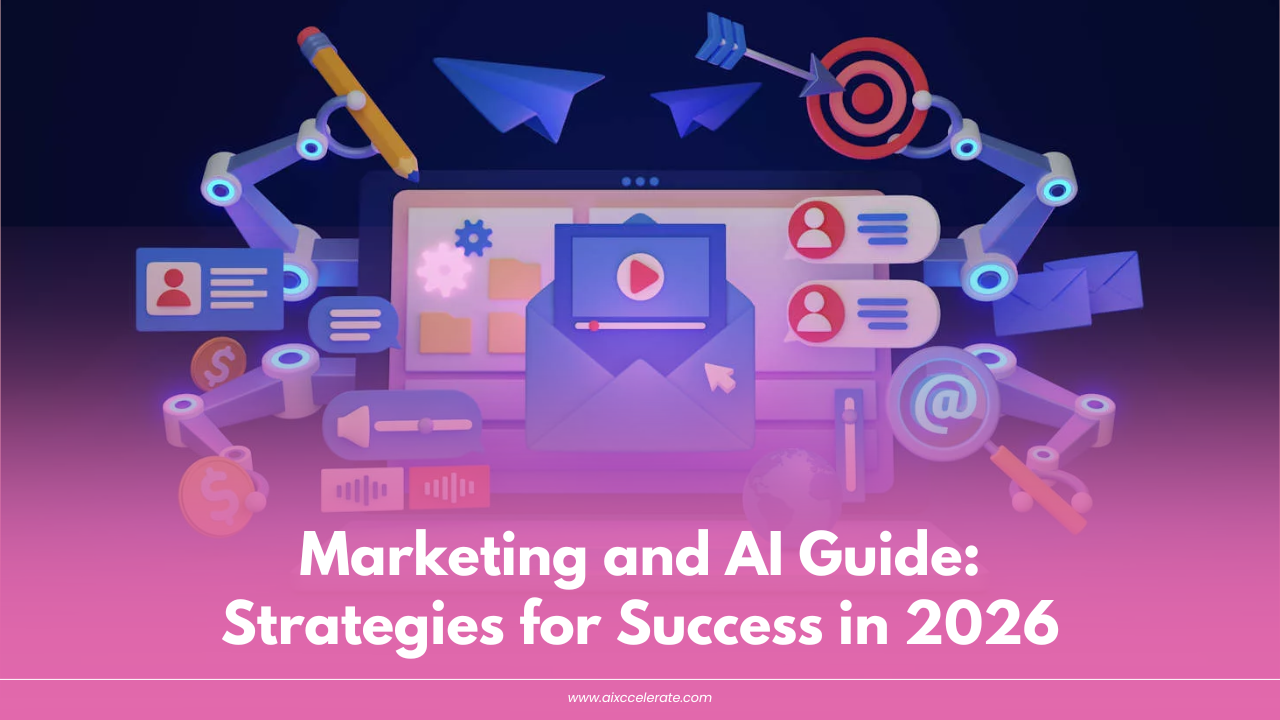
Marketing and AI Guide: Strategies for Success in 2026
As 2026 approaches, marketing and AI are converging to reshape how brands grow. This guide explores key trends, tools, case studies, and step-by-step strategies to harness AI for personalization, automation, and measurable marketing success.
Imagine a near future where marketing and ai work together to anticipate what customers want before they even ask. Businesses are already starting to unlock this powerful synergy as 2026 approaches.
This guide will show you how to leverage marketing and ai for measurable growth. You will gain strategies that are both actionable and supported by real data.
Get ready to explore emerging trends, step-by-step integration tactics, essential tools, hands-on case studies, and the key metrics that define marketing success. Empower your marketing and ai approach to thrive in a digital landscape that is evolving faster than ever.
The Evolving Landscape of Marketing and AI in 2026
The landscape of marketing and ai continues to transform rapidly as we approach 2026. Businesses face an ecosystem where artificial intelligence is not just a supporting tool but a driving force behind strategy, execution, and measurable results.
![[object Object]](https://resources.aixccelerate.com/content/images/2026/03/ctf-1773511848898-4lrzigf0to8.jpg)
Key Trends Shaping Marketing and AI
Several pivotal trends are shaping the future of marketing and ai. The rise of hyper-personalization stands out, driven by AI-powered data analysis that enables brands to tailor experiences for each customer. Generative AI is now producing not only text but also images and videos, revolutionizing content creation and campaign agility.
Conversational AI and voice assistants are transforming customer interaction. Customers increasingly expect instant, natural dialogue with brands, whether through AI chatbots or virtual assistants. This shift enhances engagement and streamlines support.
Predictive analytics powered by artificial intelligence is optimizing campaign performance. Marketers can now forecast outcomes, adjust in real time, and allocate resources efficiently. AI-enabled automation platforms are becoming the backbone of modern marketing operations, reducing manual effort and increasing speed to market.
Regulatory changes are also influencing how marketing and ai operate, especially regarding data privacy and compliance. Marketers must stay vigilant as new policies emerge.
A recent Salesforce survey found that 67% of marketers reported higher ROI from AI-powered personalization in 2025. For a broader perspective on these innovations, see this AI marketing strategies overview.
Trend | Impact Area | Example Benefit |
Hyper-personalization | Customer Experience | Increased engagement |
Generative AI | Content Production | Faster, scalable campaigns |
Conversational AI | Customer Engagement | Improved support efficiency |
Predictive Analytics | Campaign Optimization | Higher conversion rates |
Automation Platforms | Workflow Efficiency | Reduced manual tasks |
Regulatory Changes | Data Privacy | Enhanced trust |
These trends are redefining how marketing and ai intersect, pushing boundaries and creating new opportunities for brands ready to adapt.
Challenges and Opportunities
With such rapid innovation, marketing and ai integration brings both challenges and opportunities. One major challenge is balancing automation with maintaining an authentic brand voice. Over-automation can dilute messaging, so brands must ensure AI supports, not replaces, human creativity.
Data privacy and ethical considerations are increasingly important. As regulations like GDPR and CCPA evolve, marketers need robust strategies to protect customer information and maintain compliance. Internal resistance to AI adoption also persists, often rooted in skill gaps or fear of change.
Despite these hurdles, the opportunities are immense. AI provides a competitive edge by enabling faster decision-making and more precise targeting. Retailers leveraging AI-driven recommendations have boosted conversion rates by 30%, showcasing the tangible benefits of embracing these technologies.
Experts predict that by 2026, AI will handle 80% of routine marketing tasks, freeing teams to focus on strategic innovation. The organizations that proactively address challenges and invest in upskilling will be best positioned to capitalize on the synergy between marketing and ai.
In summary, the evolving landscape of marketing and ai in 2026 is one of dynamic change. By staying informed and agile, businesses can turn challenges into opportunities and set the stage for future success.
Step-by-Step Guide to Integrating AI into Your Marketing Strategy
Integrating marketing and ai requires a structured, phased approach. The following step-by-step guide gives you a clear roadmap to leverage AI for sustainable marketing growth in 2026.
![[object Object]](https://resources.aixccelerate.com/content/images/2026/03/ctf-1773511849920-haklrjl2e4.jpg)
Step 1: Assess Your Current Marketing Capabilities
Start by auditing your current marketing and ai environment. Review your existing marketing tools, data sources, and campaign workflows. Identify bottlenecks, inefficiencies, and manual processes that slow down your team.
Create a checklist of pain points where AI could add value. For example, repetitive segmentation, slow reporting, or fragmented customer data. Evaluate your team's AI readiness by surveying skills, comfort with new technology, and openness to change.
Brands succeeding with marketing and ai often use structured AI readiness assessments. These assessments pinpoint where to begin integration and highlight training needs. By understanding your baseline, you can set realistic expectations and prioritize the most impactful opportunities.
Step 2: Define Clear Objectives and KPIs
With your baseline set, define measurable goals for marketing and ai initiatives. Start by aligning AI projects with your broader business strategy. Are you focused on growing leads, improving retention, or increasing conversion rates?
Select clear KPIs that reflect your objectives. Examples include:
- Customer acquisition cost
- Customer lifetime value
- Conversion rate
- Retention rate
Document your objectives and ensure all stakeholders agree. Consistent goal-setting creates a shared vision for how marketing and ai will drive business outcomes. Regularly revisit these KPIs as you progress, adjusting targets based on new data and evolving business priorities.
Step 3: Choose the Right AI Tools and Platforms
Selecting the best tools is crucial for successful marketing and ai integration. Research leading AI marketing platforms such as HubSpot, Salesforce Einstein, and others. Evaluate each platform for integration capabilities, scalability, and security features.
Use these criteria to guide your selection:
- Ease of integration with current systems
- Scalability for future growth
- Data privacy and compliance support
- Vendor support and training resources
Consider leveraging AI tools and playbooks to streamline your evaluation process. These resources provide actionable frameworks and toolkits to help you choose and implement AI solutions efficiently.
When comparing vendors, request demos and trial access to test usability. Involve both marketing and IT teams to ensure the chosen tools fit your technical and strategic needs.
Step 4: Data Collection and Preparation
High-quality data fuels effective marketing and ai strategies. Begin by consolidating customer data from all channels. Check for completeness, accuracy, and consistency. Data cleaning is essential to avoid skewed insights.
Address data privacy and compliance early. Review regulations like GDPR and CCPA to ensure lawful data handling. Collaborate with your legal team to document consent processes and data storage policies.
Use AI-driven data enrichment tools to fill gaps and segment audiences more precisely. Well-prepared data sets the stage for successful AI-powered personalization and analytics. Ongoing data quality checks will keep your marketing and ai initiatives on track.
Step 5: Implement AI-Driven Campaigns
Launch your first AI-powered campaigns in a controlled environment. Start with AI-driven personalization engines to tailor website, email, or ad content for each user. Automated email, social, and ad campaigns can save time and boost engagement.
Monitor initial results closely using real-time analytics. Adjust parameters as needed to optimize campaign performance. For example, tweak email subject lines, ad creative, or audience segments based on early feedback.
Successful marketing and ai rollouts often begin with small pilots, expanding as results improve. Document lessons learned and share them across your team to build AI confidence and expertise.
Step 6: Foster Human-AI Collaboration
AI is most effective when paired with human insight. Train your marketing team to work alongside AI tools. Offer workshops on interpreting AI recommendations, troubleshooting errors, and identifying creative opportunities.
Redefine roles and responsibilities to maximize both human and AI strengths. Encourage a culture of innovation where team members experiment and share best practices.
Continuous learning is key to long-term success with marketing and ai. Provide access to ongoing education, industry webinars, and AI certification programs. This investment will keep your team agile as technology evolves.
Step 7: Measure, Optimize, and Scale
Measurement transforms marketing and ai from an experiment into a growth engine. Implement analytics dashboards to track key metrics, such as conversion rates, engagement, and ROI.
Use A/B testing to refine campaigns. Compare AI-generated content versus traditional approaches and iterate based on performance data. Document what works and why.
Once you achieve consistent results, scale successful strategies across additional channels and markets. Regularly review your analytics and update your marketing and ai playbook to reflect new insights and industry trends.
Essential AI Marketing Tools and Technologies for 2026
The landscape of marketing and ai is rapidly evolving, with new tools unlocking possibilities for brands of all sizes. In 2026, success hinges on selecting the right technologies that deliver insights, streamline workflows, and power smarter campaigns. Let us break down the essential categories shaping the future of marketing and ai.
![[object Object]](https://resources.aixccelerate.com/content/images/2026/03/ctf-1773511850856-59hzanqbb8i.jpg)
AI-Powered Analytics and Insights Platforms
AI-powered analytics platforms are foundational for marketing and ai success in 2026. These tools analyze massive datasets in real time, uncovering patterns and customer segments that manual analysis would miss.
With predictive analytics, marketers can forecast trends, optimize campaigns, and allocate budgets efficiently. For example, leading platforms have helped companies increase campaign efficiency by 40 percent, thanks to smarter targeting and data-driven decision-making.
Key features include automated reporting, advanced segmentation, and custom dashboards. By integrating these solutions, marketing and ai teams can consistently track performance and pivot strategies based on insights.
Generative AI for Content Creation
Generative AI is transforming content production for marketing and ai professionals. These tools automatically generate high-quality blog posts, videos, images, and social content tailored to specific audiences.
Many brands leverage AI prompt packages for marketers to streamline ideation and speed up creative workflows. For instance, e-commerce companies have reported reducing content production time by up to 70 percent with these solutions.
Capabilities include language generation, video synthesis, and graphic design. Adopting generative AI not only boosts productivity but also ensures consistent brand messaging across channels within marketing and ai strategies.
Conversational AI and Chatbots
Conversational AI and chatbots are now integral to marketing and ai, enhancing customer engagement and support. These tools handle inquiries, provide recommendations, and even qualify leads through natural language processing.
Integration with websites and messaging platforms allows for 24 7 service, improving response times and customer satisfaction. Advanced chatbots can escalate complex issues to human agents, blending automation with a personal touch.
Marketing and ai teams benefit by freeing up human resources for high-value tasks while ensuring every customer interaction is seamless and efficient.
Marketing Automation Solutions
Marketing automation solutions are essential for scaling marketing and ai operations. These platforms automate repetitive tasks such as email campaigns, ad bidding, and lead nurturing, allowing teams to focus on strategy and creativity.
Features often include workflow builders, multi channel campaign management, and detailed analytics. Leading platforms offer customizable templates and seamless integration with CRM systems.
By leveraging automation, marketing and ai professionals can launch campaigns faster, personalize messaging, and monitor performance in real time, driving measurable results across the funnel.
AI for Social Listening and Sentiment Analysis
AI powered social listening tools are revolutionizing how marketing and ai teams monitor brand reputation and track consumer trends. These platforms scan millions of online conversations, analyzing sentiment, identifying emerging topics, and alerting teams to viral trends.
For example, brands can respond to potential crises or capitalize on trending topics within hours, thanks to AI-driven alerts and dashboards. Key features include real time monitoring, influencer identification, and competitive benchmarking.
Implementing these tools allows marketing and ai leaders to stay agile and data informed in a fast paced digital environment.
AI-Driven Personalization Engines
Personalization engines powered by AI are crucial for delivering tailored experiences across all touchpoints in marketing and ai. These solutions analyze user behavior, preferences, and purchase history to recommend products, customize content, and optimize offers.
A streaming service, for example, increased user engagement by 25 percent after deploying an AI recommendation engine. Core functionalities include dynamic content adaptation, real time product recommendations, and personalized email sequences.
By investing in personalization, marketing and ai teams can deepen customer relationships and increase conversion rates, ensuring long term loyalty.
Real-World Case Studies: AI-Driven Marketing Successes
In 2026, the intersection of marketing and ai is redefining what success looks like for businesses worldwide. Across both B2C and B2B sectors, organizations are leveraging advanced technologies to create meaningful, measurable results. The following case studies shed light on how industry leaders are integrating marketing and ai into their strategies, revealing both tangible benefits and best practices for ongoing success.
![[object Object]](https://resources.aixccelerate.com/content/images/2026/03/ctf-1773511851306-g6w79nt6iau.jpg)
B2C Success Stories
In the B2C landscape, marketing and ai are propelling brands toward higher engagement and stronger customer relationships. Retailers are using AI-powered product recommendation engines to boost average order values. For example, one major retailer implemented personalized suggestions on its e-commerce platform, resulting in a 30 percent increase in conversion rates.
The travel industry is also embracing AI. Leading travel brands have deployed chatbots that now handle 80 percent of customer queries, reducing response times and improving satisfaction. In financial services, AI-driven personalization is increasing customer retention by analyzing spending patterns and tailoring offers in real time.
For more inspiring examples, explore these AI-driven customer success stories, which showcase how businesses across sectors are transforming customer experiences with marketing and ai solutions.
B2B Success Stories
B2B companies are equally reaping the rewards of marketing and ai integration. SaaS providers are leveraging predictive lead scoring, which enables sales teams to prioritize prospects more effectively, resulting in a more efficient sales pipeline. Manufacturing firms are utilizing AI-optimized ad targeting, allowing them to generate higher-quality leads and improve ROI.
One global brand streamlined its entire campaign process using AI automation, achieving a 50 percent faster campaign turnaround compared to traditional methods. These advancements illustrate the significant operational efficiencies that marketing and ai deliver in competitive B2B markets.
The common thread in these B2B stories is the ability to act on data-driven insights, automate routine processes, and allocate resources where they have the greatest impact.
Lessons Learned and Best Practices
The most successful marketing and ai initiatives share a few critical lessons. First, aligning AI projects with clear business goals ensures technology investments support overall strategy. Second, organizations must be proactive in overcoming implementation challenges, such as internal resistance or skill gaps, by fostering a culture of innovation and continuous learning.
Measuring and communicating ROI is essential for securing ongoing buy-in from stakeholders. The key is to leverage robust analytics, set realistic KPIs, and iterate based on performance data. As marketing and ai continue to evolve, staying agile and informed will be crucial for long-term success in any industry.
Metrics and KPIs: Measuring the Impact of AI on Marketing
In 2026, the success of marketing and ai efforts will be defined by clear, data-driven metrics. As AI becomes integral to marketing strategies, businesses must measure its true impact with precision. Understanding which KPIs matter, how to track them, and how to use insights for continuous improvement is crucial for sustained growth.
Key Performance Indicators for AI Marketing
Selecting the right KPIs ensures your marketing and ai strategy delivers measurable value. Essential KPIs include:
KPI | Definition | Why It Matters |
Conversion Rate | Percentage of users taking desired action | Measures campaign effectiveness |
Click-Through Rate (CTR) | Ratio of clicks to impressions | Indicates engagement and targeting accuracy |
Customer Lifetime Value | Total revenue from a customer over time | Guides retention and personalization |
Retention Rate | Percentage of customers who return | Tracks loyalty and AI-driven experiences |
Cost Per Acquisition | Cost to acquire a new customer | Assesses efficiency of AI-powered efforts |
ROI | Return on marketing investment | Evaluates overall financial impact |
For example, AI-driven personalization can increase conversion rates and customer lifetime value by delivering tailored experiences. In a fast-evolving landscape, aligning marketing and ai KPIs with business goals ensures that every initiative contributes to bottom-line growth.
Tools for Measurement and Reporting
Modern marketing and ai platforms offer robust analytics dashboards, enabling teams to monitor KPIs in real time. Leading solutions integrate multiple data sources, providing a holistic view of campaign performance.
Key features to look for include:
- AI-powered trend analysis and anomaly detection
- Customizable dashboards for different team roles
- Integration with CRM and advertising platforms
- Automated reporting and visualization
Using these tools, marketers can pinpoint which strategies drive results, optimize campaigns on the fly, and ensure data accuracy. As AI’s financial impact grows, tracking ROI becomes even more critical. According to AI's financial impact in 2026, companies are prioritizing metrics that demonstrate real-world value from AI investments.
Benchmarking and Continuous Improvement
Benchmarking your marketing and ai results against industry standards sets a foundation for informed decision-making. Set realistic targets, monitor progress, and use AI-generated insights to refine campaigns.
Steps for continuous improvement:
- Regularly review performance against benchmarks
- Implement A/B testing for creative and targeting
- Use AI insights to identify new opportunities
Companies that embrace this approach have reported up to a 35 percent increase in ROI through ongoing optimization. By committing to a cycle of measurement and adjustment, organizations ensure their marketing and ai strategies remain effective and future-ready.
Overcoming Common Pitfalls and Ensuring Ethical AI Use in Marketing
Navigating the intersection of marketing and ai brings both opportunity and responsibility. As organizations adopt advanced AI tools, ethical considerations become central to building customer trust and long-term brand value. Proactively tackling common pitfalls ensures your marketing and ai strategy remains resilient and future-ready.
Avoiding Bias and Ensuring Fairness
One of the most pressing challenges in marketing and ai is identifying and mitigating algorithmic bias. AI systems trained on unbalanced or non-representative data can unintentionally reinforce stereotypes or exclude key audiences.
To foster fairness, regularly audit your data sets for diversity and use transparent model evaluation techniques. Leveraging insights from sources such as Detecting bias in AI marketing can help teams recognize and address potential biases early, preventing reputational damage and supporting equitable outcomes.
Data Privacy and Compliance
With marketing and ai strategies increasingly reliant on consumer data, maintaining privacy and adhering to regulations like GDPR and CCPA is essential.
Review data collection practices frequently, anonymize sensitive information, and communicate your privacy policies clearly to customers. Building trust through transparency helps prevent data misuse and ensures your initiatives remain compliant as laws evolve.
Human Oversight and Accountability
While automation is a core benefit of marketing and ai, human judgment remains crucial. Define clear roles for team members to review AI-driven outputs, especially in customer-facing campaigns.
Establish escalation protocols for sensitive decisions and maintain detailed documentation of AI processes. This approach ensures accountability and reduces the risk of errors.
Future-Proofing Your AI Marketing Strategy
The landscape of marketing and ai is rapidly changing. Stay informed about new regulations, technological advances, and ethical best practices.
Invest in regular team training and encourage a culture of continuous improvement. By doing so, your organization can adapt quickly to change and avoid common pitfalls, as demonstrated by brands that have averted crises through proactive bias detection. As you look ahead to 2026 and start mapping out your AI marketing strategy, it’s clear that balancing innovation with efficiency will be key. We’ve explored how AI can drive hyper-personalization, automate campaigns, and deliver real, measurable results—especially when your team and technology work hand in hand. If you’re ready to take the next step and want guidance on integrating AI seamlessly into your business, I invite you to connect with someone who understands both the opportunities and the challenges. Let’s turn your AI ambitions into action—Book a meeting with our expert.
Frequently Asked Questions
What is Marketing and AI for Success?
The landscape of marketing and ai continues to transform rapidly as we approach 2026. Businesses face an ecosystem where artificial intelligence is not just a supporting tool but a driving force behind strategy, execution, and measurable results. ...
How does the evolving landscape of marketing and ai in 2026 work?
The landscape of marketing and ai continues to transform rapidly as we approach 2026. Businesses face an ecosystem where artificial intelligence is not just a supporting tool but a driving force behind strategy, execution, and measurable results. ...
What are the step-by-step guide to integrating ai into your marketing strategy?
Integrating marketing and ai requires a structured, phased approach. The following step-by-step guide gives you a clear roadmap to leverage AI for sustainable marketing growth in 2026. Step 1: Assess Your Current Marketing Capabilities Start by au...
How does essential ai marketing tools and technologies for 2026 work?
The landscape of marketing and ai is rapidly evolving, with new tools unlocking possibilities for brands of all sizes. In 2026, success hinges on selecting the right technologies that deliver insights, streamline workflows, and power smarter campa...
How does real-world case studies: ai-driven marketing successes work?
In 2026, the intersection of marketing and ai is redefining what success looks like for businesses worldwide. Across both B2C and B2B sectors, organizations are leveraging advanced technologies to create meaningful, measurable results. The followi...
Related Articles
- AI Deployment Guide: Strategies for Success in 2026
- AI For Sales And Marketing Guide: Strategies For 2026 Success
- AI-Powered Growth Strategies for North American SMBs in 2026
- AI for Small Business Guide: Unlock Success in 2026
- The Essential Guide to AI for Enterprise Success in 2026
- AI-Driven Success: Achieve 40% Faster Results in 2026