What Makes Goal-Based AI Agents Smarter Than Traditional AI?
Discover how goal-based AI agents are revolutionizing business automation. Unlike reactive systems, these intelligent agents plan, adapt, and pursue clear objectives—driving innovation from robotics to healthcare. Learn their architecture and real uses.
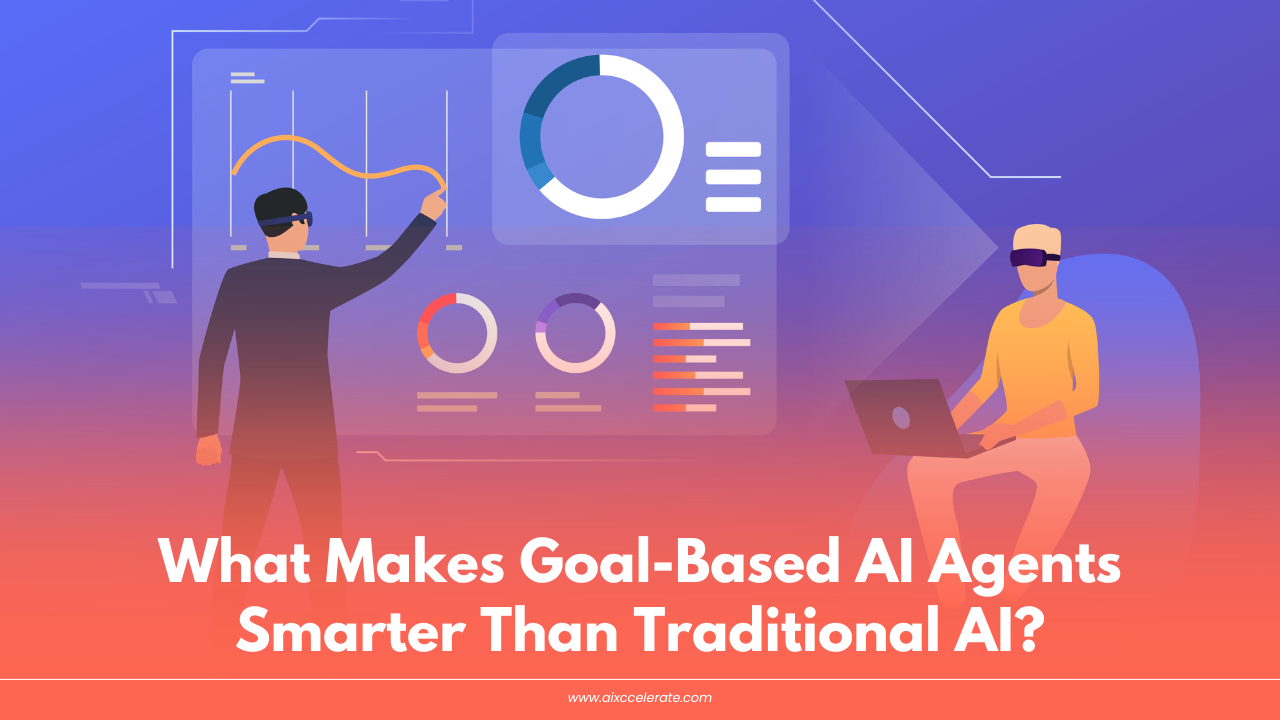
Imagine a world where intelligent systems do more than just react. Picture AI that can plan, adapt, and pursue clear goals, driving innovation across every industry. This is the promise of the goal based agent in ai.
In this guide, we will explore what sets these agents apart, how they work, and why they matter for the future of automation. You will discover their unique architecture, compare different agent types, and see real examples from robotics to healthcare.
Ready to unlock the next evolution in AI? Let’s dive in and learn how goal based agents can empower your business for 2026.
What is a Goal-Based Agent in AI?
Imagine a world where machines do not just react, but actively pursue objectives. This is the promise of the goal based agent in ai, a transformative leap in artificial intelligence. Unlike simple systems that only respond to immediate inputs, these agents are driven by clear, adaptable goals, enabling higher autonomy and strategic behavior.
![[object Object]](https://resources.aixccelerate.com/content/images/2026/03/ctf-1773511889197-ucjziv0881o.jpg)
Defining Goal-Based Agents
A goal based agent in ai is an intelligent system designed to achieve specific objectives within its environment. Unlike reactive agents, which act solely on current inputs, or utility-based agents, which optimize for immediate gains, goal based agents operate with explicit end-states in mind.
For example, consider a self-driving car. Its primary objective is to reach a destination safely, but it must also adapt its path as traffic, obstacles, or weather change. The car’s actions are guided by a structured goal, not just a set of hardcoded rules.
The ability to represent, pursue, and dynamically update goals sets the goal based agent in ai apart. This flexibility allows the agent to shift strategies as needed, ensuring robust performance even in unpredictable environments.
Historically, AI began with rule-based systems that could only follow fixed instructions. Over time, the field evolved toward agents capable of setting and achieving goals, reflecting a move toward higher-level cognition and autonomy. As detailed in What is a Goal-Based Agent?, this shift enables machines to plan, adapt, and solve complex problems that static systems cannot.
In summary, the goal based agent in ai is essential for applications that demand true intelligence, adaptability, and independent decision-making.
Agent Type | Main Feature | Example |
Reactive | Responds to stimuli | Light-following robot |
Utility-Based | Optimizes a utility | Stock trading bot |
Goal-Based | Achieves explicit goal | Self-driving car |
Core Principles and Theoretical Foundations
At the heart of every goal based agent in ai is the principle of goal-driven architecture. These agents interact continuously with their environment, perceive changes, and update their understanding to inform future actions.
The agent-environment loop consists of several key cycles:
- Planning: Determining a sequence of actions to reach the goal.
- Execution: Carrying out the chosen actions.
- Adaptation: Monitoring results and adjusting plans as needed.
Decision theory and search algorithms play central roles. For instance, a chess-playing goal based agent in ai projects multiple moves ahead, evaluating each scenario to achieve checkmate. This process demands not only intelligence but also the capacity to learn and refine strategies based on feedback.
Competitor research highlights that advanced agents continuously update their goals as they receive new data. This ongoing refinement is vital for success in complex, changing domains.
Ultimately, the core principles of a goal based agent in ai—goal formulation, planning, execution, and adaptation—are foundational for tackling real-world challenges where static rules fall short. By leveraging these principles, such agents can navigate uncertainty, optimize outcomes, and deliver strategic value across industries.
Key Components and Architecture of Goal-Based Agents
Understanding the architecture of a goal based agent in ai is essential for grasping how these systems achieve high-level autonomy. Each module plays a vital role, working together to process information, make decisions, and adapt in real time. Let’s break down the core components that empower these agents to operate in complex environments.
![[object Object]](https://resources.aixccelerate.com/content/images/2026/03/ctf-1773511890362-2uctaur9gnz.jpg)
Perception Module
The perception module forms the foundation of any goal based agent in ai. Its primary function is to collect and interpret data from the environment using a variety of sensors and data streams. These can include cameras, LIDAR, IoT devices, or even database feeds.
Take the example of a warehouse robot. Its perception module uses LIDAR and cameras to detect obstacles, navigate aisles, and identify inventory. Accurate perception is vital, as errors at this stage can cascade through the agent’s decision-making process.
However, perception is not without challenges. Noisy or incomplete data can lead to misinterpretations. To ensure reliability, a goal based agent in ai often employs data fusion techniques and robust filtering algorithms.
Knowledge Base and World Modeling
A goal based agent in ai relies on a comprehensive knowledge base to store facts, rules, and structured representations of its environment. This world model is built using ontologies, logical rules, and, increasingly, machine learning from past experiences.
For instance, in healthcare, a medical diagnosis agent references a knowledge base containing patient records and clinical guidelines. This enables it to interpret symptoms in context and recommend actions aligned with patient goals.
Integration between perception and the knowledge base is key. By continuously updating its world model, a goal based agent in ai maintains situational awareness and supports nuanced decision-making in complex scenarios.
Decision-Making Module
The decision-making module is where a goal based agent in ai transforms objectives into actionable plans. This involves formulating goals, evaluating available actions, and selecting the best course based on predicted outcomes.
Consider an AI system in logistics. It must choose optimal delivery routes while accounting for traffic, deadlines, and changing conditions. Decision-making draws on heuristics, search algorithms, and reinforcement learning to stay aligned with the agent’s overall objectives.
For more information on how leading platforms build and deploy these intelligent decision frameworks, see the AI Xccelerate goal-based agents page, which details practical architectures in real-world settings.
Planning and Execution Modules
Once a goal based agent in ai has selected its strategy, the planning and execution modules come into play. Planning determines the sequence of actions needed to achieve the goal, including contingency plans for unexpected obstacles.
For example, an autonomous drone must plan a flight path, but also be ready to reroute if weather conditions change. Execution involves interfacing with actuators or digital systems to carry out these plans, with constant monitoring and feedback to ensure success.
Real-time adaptation is a hallmark of this stage. The planning and execution modules allow the agent to stay agile, making adjustments on the fly to reach its objectives efficiently.
Adaptation and Learning Capabilities
Adaptation is what sets an advanced goal based agent in ai apart from simpler systems. These agents continuously monitor their progress toward goals, learning from new data and experiences in real time.
A customer support AI, for example, improves its responses by analyzing user feedback and updating its strategies. This capability is crucial for handling uncertainty and dynamic environments, where fixed rules quickly become obsolete.
Ultimately, adaptation ensures that a goal based agent in ai remains effective over the long term, even as circumstances evolve and new challenges arise.
Types of Goal-Based Agents in AI
Understanding the different types of goal based agent in ai is essential for selecting the right approach for any application. Each type offers unique strengths, from quick reactions to deep learning and strategic planning. Let us explore the main categories and see how they compare in real-world scenarios.
![[object Object]](https://resources.aixccelerate.com/content/images/2026/03/ctf-1773511891503-w4fhf1834kh.jpg)
Reactive Goal-Based Agents
A reactive goal based agent in ai operates by responding quickly to environmental changes, with little or no planning. These agents excel in situations demanding immediate action.
- Characteristics: Rapid response, minimal memory, direct mapping from perceptions to actions.
- Use cases: Assembly line robots, safety monitoring systems.
- Example: A factory robot instantly halts when a sensor detects a human nearby.
- Pros: Very fast, simple implementation.
- Cons: Lacks foresight or strategic depth, may struggle with complex tasks.
Reactive agents are best when speed is critical, but they are limited in handling long-term objectives.
Deliberative Goal-Based Agents
Deliberative agents represent a more advanced type of goal based agent in ai. They use internal models and detailed planning to achieve their objectives.
- Characteristics: Extensive reasoning, model-based planning, slower but more thorough.
- Use cases: Autonomous vehicles, strategic game AI.
- Example: A chess-playing AI evaluating multiple move sequences to reach checkmate.
- Pros: Handles complex, multi-step problems, adaptable to changing goals.
- Cons: Higher computational requirements, may be too slow for real-time response.
Deliberative agents are ideal for scenarios where strategic planning outweighs the need for instant decisions.
Hybrid Agents
Hybrid agents combine the strengths of both reactive and deliberative approaches, making them a versatile category of goal based agent in ai. They can switch between rapid responses and deep planning as needed.
- Mechanisms: Integrate fast reaction modules with advanced planning systems.
- Example: A self-driving car that avoids a sudden obstacle while recalculating the optimal route.
- Benefits: Flexibility, robustness, effective in unpredictable environments.
Recent research, such as work on global planning and hierarchical execution for language model-based agents (Enhancing LLM-Based Agents via Global Planning and Hierarchical Execution), demonstrates how hybrid agents achieve both speed and strategic depth.
Learning Agents
A learning agent is a dynamic type of goal based agent in ai that continuously improves its performance through experience.
- Techniques: Reinforcement learning, supervised learning, adaptation from outcomes.
- Use cases: Recommendation engines, adaptive customer support bots.
- Example: An e-commerce AI that refines suggestions based on user feedback.
- Advantages: Adaptability, evolving strategies, handles new goals and environments.
Learning agents thrive in settings where objectives or conditions change frequently, ensuring sustained effectiveness over time.
Comparative Analysis
To help you select the right goal based agent in ai for your needs, consider the following summary:
Agent Type | Speed | Planning Ability | Adaptability | Best Use Case |
Reactive | High | Low | Low | Real-time safety monitoring |
Deliberative | Low | High | Moderate | Strategic game play, navigation |
Hybrid | High | High | High | Autonomous vehicles, robotics |
Learning | Moderate | Moderate | Very High | Personalized recommendations |
Hybrid and learning agents are increasingly popular in 2026, offering the flexibility and intelligence needed for complex, changing environments. When choosing a goal based agent in ai, focus on your application's need for speed, adaptability, and planning depth.
Applications of Goal-Based Agents: Industry Use Cases
Goal based agent in ai systems are revolutionizing industries by enabling machines to act with purpose, learn from experience, and adapt in real time. Let us explore how these intelligent agents are transforming key sectors, delivering measurable value, and setting the stage for the future of automation.
![[object Object]](https://resources.aixccelerate.com/content/images/2026/03/ctf-1773511892633-14yva1hhjye.jpg)
Robotics and Automation
In manufacturing and warehouse settings, goal based agent in ai technology powers robots that can interpret sensor data, plan assembly tasks, and adapt to shifting conditions. For example, a warehouse robot equipped with cameras and LIDAR autonomously navigates aisles, adjusting its route when obstacles appear. These agents optimize workflows, boost productivity, and improve safety by instantly responding to real-time feedback.
Businesses are increasingly leveraging goal-based AI agents to automate complex processes and drive operational excellence. The flexibility of these agents enables human-robot collaboration, leading to faster cycle times and reduced errors.
Autonomous Vehicles and Transportation
A goal based agent in ai is at the heart of self-driving cars, drones, and logistics fleets. These agents continuously collect environmental data, set navigation goals, and adjust their plans for weather, traffic, or unexpected hazards. Imagine a delivery drone rerouting to avoid a storm or a car recalculating its path when a road closes.
This adaptive intelligence ensures safety and efficiency, which is critical for large-scale deployment. As adoption grows, accident rates are declining and logistics operations are becoming more reliable, all thanks to the decision-making power of goal based agent in ai systems.
Game AI and Virtual Environments
Modern games rely on goal based agent in ai to create realistic, challenging non-player characters (NPCs). These agents set objectives, anticipate player actions, and adapt their tactics dynamically, making gameplay more engaging and unpredictable.
In strategy games, AI opponents use goal-based planning to outmaneuver human players, learning from each match. This results in deeper immersion and higher replay value, as the game environment feels alive and responsive to choices.
Resource Management and Optimization
Goal based agent in ai technology is a game changer for resource-intensive industries like supply chain, energy, and operations. For instance, smart grid systems use these agents to balance electricity supply and demand, automatically rerouting power during outages or peak hours.
Companies benefit from lower costs, reduced waste, and improved sustainability. Real-world case studies demonstrate that AI-driven optimization leads to measurable efficiency gains, making goal based agent in ai an essential tool for modern business management.
Healthcare and Diagnostics
In healthcare, goal based agent in ai supports clinicians in diagnosis, treatment planning, and patient monitoring. An AI agent may analyze patient records, reference clinical guidelines, and recommend personalized therapies, always with the goal of improving patient outcomes.
By continuously learning from new data, these agents reduce clinician workload and help identify the best interventions quickly. Their integration with electronic health records and telemedicine platforms is reshaping how care is delivered and managed.
Emerging Applications in 2026
Looking ahead, goal based agent in ai will power breakthroughs in education, space exploration, and smart cities. Personalized learning platforms will tailor instruction to each student’s goals, while autonomous agents will manage spacecraft tasks far from Earth.
Smart city infrastructure will use AI agents to optimize traffic, energy, and emergency response. According to recent forecasts, the AI agents market is projected to grow at 43.3 percent annually through 2030, signaling widespread adoption and innovation across every sector.
Challenges and Future Directions for Goal-Based Agents
The evolution of goal based agent in ai is accompanied by new challenges and exciting opportunities. As these systems mature, organizations must address complex technical, ethical, and organizational hurdles to fully realize their potential. Understanding what lies ahead is essential for anyone looking to leverage goal based agent in ai for future-ready solutions.
Computational Complexity and Scalability
As goal based agent in ai tackle larger and more dynamic environments, computational demands rise sharply. Planning and decision-making for city-scale logistics or real-time operations require advanced algorithms and significant processing power. Achieving rapid, optimal solutions often depends on leveraging parallel computing or even emerging hardware like quantum processors.
AI teams must continuously balance the trade-off between computational cost and the depth of reasoning. For instance, optimizing delivery routes across a metropolitan area can strain traditional systems. Scalable architectures, smart caching, and efficient data structures are essential for keeping goal based agent in ai responsive and effective at scale.
Dealing with Uncertainty and Dynamic Change
A major challenge for any goal based agent in ai is thriving in unpredictable, ever-changing environments. Real-world data is often noisy or incomplete, and goals themselves can shift based on new information. Techniques like probabilistic reasoning and robust adaptation help agents navigate these uncertainties.
For example, a medical AI system must adjust its recommendations as new disease outbreaks emerge or as patient data evolves. Continuous learning and feedback loops are key for a goal based agent in ai to remain effective, even as conditions and requirements change rapidly.
Ethical, Legal, and Safety Considerations
As goal based agent in ai become more autonomous, ensuring ethical, legal, and safe operation grows in importance. Transparency in decision-making, unbiased data handling, and respect for privacy are all critical. Regulatory agencies are starting to address the unique risks posed by autonomous agents, especially in sensitive fields like transportation and healthcare.
The need for explainability is especially pressing. Stakeholders must understand how and why an agent made a particular choice. For a comprehensive overview of explainable goal-driven agents and robots, see Explainable Goal-Driven Agents and Robots – A Comprehensive Review. Addressing these factors builds trust and accountability into every goal based agent in ai deployment.
Integration with Human Teams and Organizations
Collaboration between humans and goal based agent in ai is transforming workplaces. These agents can act as team members, provide decision support, or automate routine tasks. However, seamless integration requires thoughtful human-AI interaction design and ongoing training.
For instance, in customer service, a goal based agent in ai must interpret human intent and escalate cases when needed. Building trust, clear communication protocols, and feedback mechanisms are essential for successful adoption in any organization.
Future Trends and Innovations
Looking ahead, several trends will shape the next generation of goal based agent in ai. Advances in explainable AI will make agent decisions more transparent. Self-improving agents capable of autonomous learning will become more common, enabling continuous adaptation.
Widespread adoption is expected across industries, driven by measurable ROI and operational efficiency. For practical insights into the impact and return on investment of AI agents, explore Resources on AI agent ROI. The market for goal based agent in ai is projected to grow rapidly by 2026, signaling a shift toward smarter, more autonomous systems that can handle complex, evolving challenges. As you’ve seen throughout this guide, goal based AI agents are reshaping how businesses approach productivity, decision making, and innovation across every function. If you’re curious about how these forward looking solutions could fit into your own organization or want to see real world impact in areas like sales, marketing, or operations, I encourage you to take the next step. Let’s explore how a fully managed, business ready AI agent can help you drive measurable results and future proof your workflows. Book a meeting with our expert and discover what’s possible for your team.
Frequently Asked Questions
What is What Makes Goal-Based AI Agents Smarter Than Traditional AI??
Imagine a world where machines do not just react, but actively pursue objectives. This is the promise of the goal based agent in ai, a transformative leap in artificial intelligence. Unlike simple systems that only respond to immediate inputs, the...
What is a Goal-Based Agent in AI?
Imagine a world where machines do not just react, but actively pursue objectives. This is the promise of the goal based agent in ai, a transformative leap in artificial intelligence. Unlike simple systems that only respond to immediate inputs, the...
How does key components and architecture of goal-based agents work?
Understanding the architecture of a goal based agent in ai is essential for grasping how these systems achieve high-level autonomy. Each module plays a vital role, working together to process information, make decisions, and adapt in real time. Le...
How does types of goal-based agents in ai work?
Understanding the different types of goal based agent in ai is essential for selecting the right approach for any application. Each type offers unique strengths, from quick reactions to deep learning and strategic planning. Let us explore the main...
How does applications of goal-based agents: industry use cases work?
Goal based agent in ai systems are revolutionizing industries by enabling machines to act with purpose, learn from experience, and adapt in real time. Let us explore how these intelligent agents are transforming key sectors, delivering measurable ...
Related Articles
- The AI Growth Model That's Making Traditional Hiring Obsolete
- Why AI Makes Channel Partners More Valuable — And Why Smart SMBs Are Paying Attention
- How SMBs Can Build an AI Workforce in 2026: AI Agents + Microsoft 365 Copilot
- The AI Vendor Selection Guide: Red Flags, Green Flags, and Questions That Expose the Truth
- AI Collaboration Guide: Unlocking Smarter Teamwork in 2026
- AI for Small Businesses Versus Traditional Solutions 2026